Your Complete Guide to Tipping Norms, What’s Optional vs Appreciated, and Respectful Cultural Interactions
Travelers to Kenya often ask one of the trickiest etiquette questions: How much to tip in Kenya? Tipping isn’t mandatory, but it’s a highly valued way to show appreciation for excellent service across restaurants, hotels, tours, safaris, and transportation. Understanding tipping norms and expectations ahead of your trip helps you travel respectfully, support local service workers, and avoid awkward money moments.
In this comprehensive guide, we cover tipping in Kenya for everyday services—including restaurants, guides, drivers, hotels, porters, safari crews, spas, and taxis—while explaining what’s optional vs appreciated and how to tip respectfully within local custom. By the end, you’ll know how much to tip in Kenya with confidence.
Understanding Tipping Culture in Kenya
Is Tipping Mandatory in Kenya?
Tipping in Kenya is not mandatory, but it’s widely appreciated, especially in tourism and hospitality sectors where service workers often rely on gratuities to supplement modest wages.
In everyday urban settings, tipping may be sparing or optional, but in tourist areas, restaurants, hotels, and safari camps, gratuities are a familiar part of service culture. Always remember: a tip is a thank-you gesture, not an obligation.
Kenyan Shillings vs Other Currencies
Use Kenyan Shillings (KES) whenever possible. Small denominations are best, as bigger foreign notes (especially high USD bills) can be hard for recipients to exchange. If you don’t have KES, US dollars are also widely accepted for tips, but locals prefer local currency.
Tipping in Restaurants & Bars

Standard Restaurant Tipping
In Kenyan restaurants, especially those frequented by tourists or in cities like Nairobi and Mombasa, a 10–15% tip of the bill is customary when the service is good.
Some establishments may already include a service charge (often 10%) in your bill. If a service charge is included, no further tip is strictly required, though an extra small amount is appreciated for exceptional service.
Casual & Local Eateries
In casual local eateries or “khaimas,” tipping isn’t expected. However, leaving small change (50–100 KES) as a kind gesture is always appreciated when service is good.
What About Bars and Cafés?
At bars and cafés, rounding up the bill or leaving a small tip (e.g., KES 50–100) is polite. For more upscale cocktail bars or standout service, a slightly higher tip is welcomed.
Tipping Hotel Staff & Accommodation Workers
Porters, Housekeepers & Bellhops
Hotel tipping in Kenya follows some informal, but widely accepted, norms:
- Porters: ~100–200 KES per bag carried.
- Housekeepers: ~200–500 KES per day, left daily or at check-out.
Concierge & Valet Services
Concierge and valet staff who go above and beyond may be tipped ~200–500 KES depending on help provided, especially with reservations or special arrangements.
Safari Camp & Lodge Staff
In lodges and safari camps, tipping is more communal: many places have a gratuities box where you can leave a daily tip (commonly ~2,000–4,000 KES per room per day) that’s shared among the team.
Some travelers also choose to hand tips directly to staff they connected with personally, such as waiters, kitchen staff, or camp attendants.
Tipping Safari Guides & Drivers
Safari Guides (Driver-Guides)

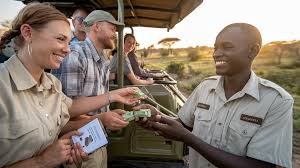
Your safari guide typically does the most work: reading tracks, spotting wildlife, handling logistics, and ensuring safety. Because of their central role, tipping guides is customary and appreciated.
A general guideline is USD 10–20 (or equivalent in KES) per guest per day of safari, depending on the length and quality of service.
Drivers & Spotters
Drivers and safari spotters (assistants who help locate wildlife) are often tipped separately from guides — typically USD 5–10 per person per day or small KES equivalent.
Tipping Tour Guides & Excursion Leaders
Tour Guides (City, Day Trips, Cultural Visits)
For city tours, cultural excursions, or walking tours, tipping the guide 500–1,000 KES per day is typical (or equivalent to $5–$10 USD), depending on the tour length and engagement.
If the guide made your experience particularly memorable with tailored insights or stories, consider tipping on the higher end of this range.
Tipping Transport & Drivers
Taxi & Ride-Hail Drivers
Tipping taxi drivers isn’t expected, but rounding up the fare to the next convenient amount is a common and appreciated gesture. For longer journeys, tipping around 10% of the fare shows courtesy, especially if they helped with luggage or recommended routes.
Private Drivers
For private drivers (e.g., airport transfers or day hires), a tip of 10% of the total cost or 100–200 KES per day is polite if they provided excellent service.
Tipping Spas, Salons & Special Services
Spa & Wellness Therapists
At spas or wellness centers, tipping 10–15% of the service cost is a good rule of thumb — similar to restaurant norms.
Other Service Providers
Services like hairdressers or barbers also appreciate tips in the 10% range, reflecting attention and skill.
Respectful Tipping: Etiquette Tips

Be Discreet & Respectful
Tipping should always be done quietly and respectfully. Avoid discussing the tip amount loudly or making a public show, as this can be seen as boastful or inconsiderate.
Check for Service Charges
Always review bills in restaurants or hotels for a service charge (often around 10%). If it’s included and goes to staff, you may choose not to add an extra tip unless service was exceptional.
Quality Over Obligation
In Kenya, tipping is an expression of gratitude for good service — not a mandatory fee. You’re always welcome to adjust your tip based on satisfaction and your personal comfort.
Why Tipping Matters Beyond Service
Supporting Local Livelihoods
Many service workers in Kenya depend on gratuities as a meaningful supplement to their income. Your tips often help support families and local communities.
Building Respectful Cultural Connections
When you learn how much to tip in Kenya and tip appropriately, you’re not just paying money — you’re engaging with local cultural norms in a respectful way that fosters goodwill.
Also read:Cost of Living in Kenya, A Realistic Budget Guide for Tourists and New Residents
Wrap-Up
Understanding how much to tip in Kenya helps ensure your travel experience is respectful, smooth, and enriching. While tipping is optional, it’s widely appreciated and plays an important role in supporting service workers — from safari guides and drivers to hotel staff and restaurant servers.
Keep a modest tipping budget in Kenyan shillings on hand, check for included service charges, and tip based on service quality and your comfort level. This thoughtful approach to tipping reflects your appreciation for good service and fosters meaningful cultural interaction while visiting Kenya.
10 Frequently Asked Questions (FAQs)
- Is tipping mandatory in Kenya?
No — tipping is optional, but it’s widely appreciated for good service, especially in hospitality and tourism. - How much should I tip in Kenyan restaurants?
Around 10–15% of the bill if service isn’t included; always check for a service charge first. - Should I tip safari guides in Kenya?
Yes — typical safari guide tips are USD 10–20 per person per day for excellent service. - What’s appropriate for taxi drivers?
Tipping is not expected; rounding up the fare is common, or about 10% for longer rides. - How much to tip hotel porters?
Usually 100–200 KES per bag, depending on effort and distance. - Do I tip housekeeping staff?
Yes — 200–500 KES per day is a thoughtful gratuity for housekeepers. - Is it okay to tip in USD?
Yes — but local currency (Kenyan shillings) is preferred and easier to use. - Should I tip tour guides?
Yes — about 500–1,000 KES per day, depending on service length and quality. - What about tipping at spas?
A tip of 10–15% of the service cost is typical for spa therapists. - Can tipping help local communities?
Absolutely — thoughtful tipping supports livelihoods and reflects respectful cultural interaction.