Introduction
Malindi sits quietly on Kenya’s north coast, where the Sabaki River meets the Indian Ocean and Swahili culture has mingled with Arab and Portuguese traders for centuries. It is less intense than Mombasa and more lived-in than Watamu, with a mix of coral mosques, beach bars, fish markets, and ruined cities slowly being reclaimed by forest.
This guide walks you through the most rewarding things to do in Malindi, from classic coastal attractions to quieter corners that many visitors miss. It is written for both Kenyans looking for an easy coastal break and international travellers curious about a slower, more grounded slice of the Kenyan coast.
Why visit
• A relaxed, historic coastal town that still feels local, not over-polished.
• Easy access to marine parks, mangroves, river estuaries, and ancient Swahili ruins.
• Wide, uncrowded beaches with good swimming and long walks at low tide.
• Strong Swahili and Italian food culture, from street snacks to family trattorias.
• Good road access from Mombasa and regular flights from Nairobi.
• A calmer alternative to busier coastal resorts, ideal for slow travel and long weekends.
Top things to do in Malindi
Explore Malindi Marine National Park
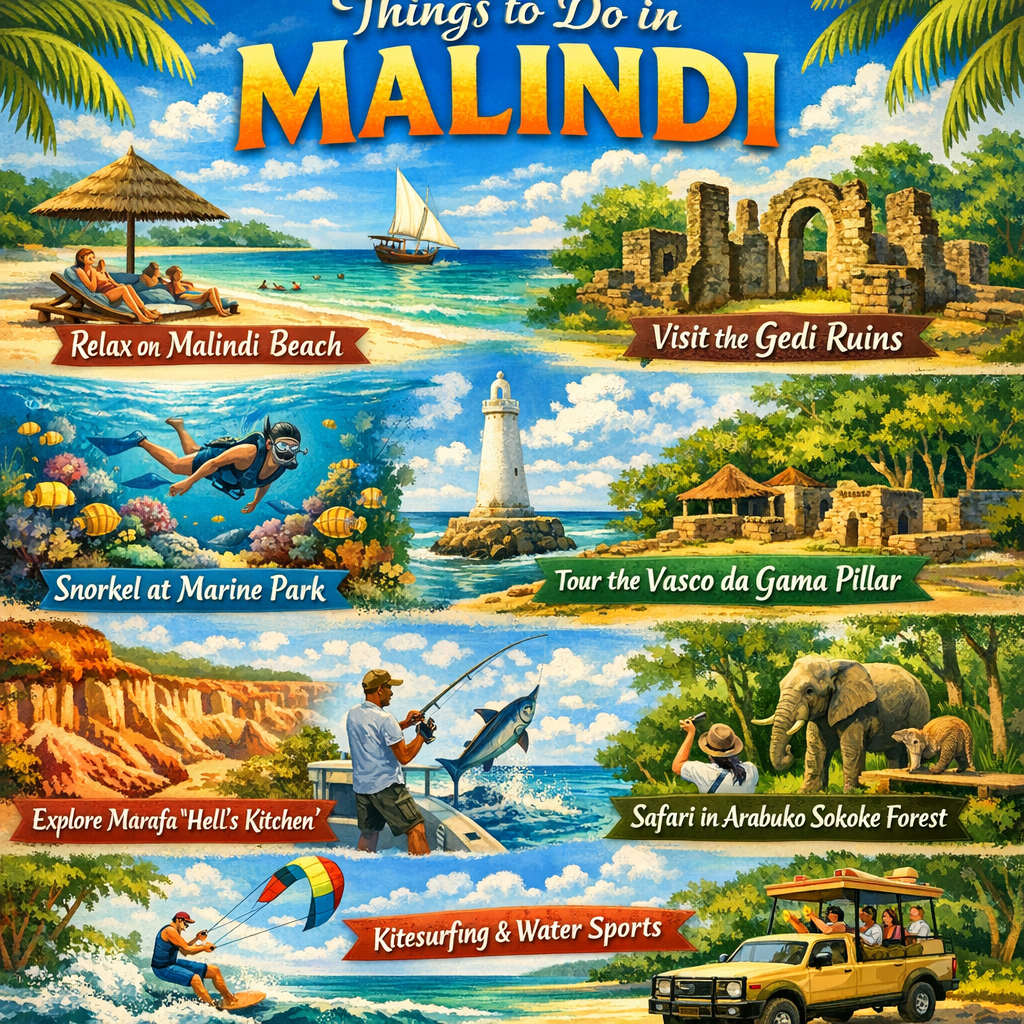
If you are choosing between coastal attractions in Kenya, the marine park here stands out for its accessibility. Glass-bottom boat trips, snorkelling, and relaxed swims in clear, shallow water give you an easy window into reef life. On a calm morning, expect butterflyfish, parrotfish, and bright coral gardens just offshore.
Walk the old town and harbour
The heart of Malindi is not the beach but its old streets near the harbour. Wander past the Juma and Noor mosques, timber doors carved in Swahili style, and shops selling khangas, spices, and everyday household goods. Visit the fish market early, where fishermen auction tuna and kingfish right off the boats, and watch dhow crews repairing their sails.
Visit the Vasco da Gama Pillar and Portuguese Chapel
On a coral outcrop above the ocean stands the Vasco da Gama Pillar, one of the oldest European monuments in Africa. Nearby, the Portuguese Chapel offers a small, quiet stop with simple graves and sea views. Together, they give a sense of how long this coast has been at the crossroads of global trade.
Day trip to Gede Ruins
About 30 minutes south lies Gede, a ruined Swahili city swallowed by coastal forest. Walking among old stone houses, mosques, and coral walls, with sykes monkeys in the trees, tells a story of a thriving town that simply faded away. Go with a site guide to understand the wells, tombs, and trading links that once tied Gede to Arabia and India.
Birding and river life at Sabaki River Mouth
North of town, the Sabaki River meets the sea in a broad estuary of sandbanks and reeds. It is one of the best places near Malindi for birdwatching, with flamingos when conditions are right, plus terns, waders, and raptors. Visit with a local guide, and time it for early morning or late afternoon when the light and bird activity are at their best.
Experience a dhow cruise
A dhow trip offers a quiet way to experience the coast from the water. Depending on the operator and tides, you may sail along the shoreline, stop for snorkelling, or anchor in shallow lagoons for grilled fish. Unlike fast motorboats, dhows encourage you to slow down and simply watch the changing colours of the ocean.
Visit the Falconry of Kenya
Inland from the beach, this small private falconry houses owls, eagles, and other raptors, many of them rescued. While it is not a wilderness experience, it offers a close-up look at birds you might only glimpse at a distance on safari. It is especially good for families, but adults with an interest in conservation also find it worthwhile.
Hidden gems
Mambrui’s golden dunes
About 20 kilometres north, Mambrui is a quieter counterpart to Malindi. Its long, windswept beach and rolling sand dunes feel far from town. Hire a tuk-tuk or boda from Malindi, carry water, and come for an evening walk when the sand cools and the light softens.
Marafa Depression (Hell’s Kitchen)
Further inland, the Marafa Depression is a sandstone canyon carved into ridges and spires of red, white, and ochre. Local stories describe it as a place of moral lessons and misfortune, giving it a cultural dimension beyond the landscape itself. Late afternoon is best, when the colours deepen and temperatures ease.
Vasco da Gama Road backstreets
Move one or two lanes back from the seafront road and you find tailors, small cafes, carpenters, and Swahili homes. Stopping for chai or a simple plate of beans and chapati offers a more grounded sense of daily life than the beach bars alone. Dress modestly and ask before taking photos of people or homes.
Local football and evening life
As the sun drops, neighbourhood pitches and open spaces fill with informal football games. Joining to watch, or playing if invited, is a simple way to connect. Afterwards, head to a local café for kahawa tungu (strong coffee) or freshly squeezed sugarcane juice.
Best beaches
Several beaches near Malindi offer slightly different moods, from family-friendly to wild and windswept. Tides here are significant, so always check local advice before swimming.
| Beach | Location | Best for | Notes |
|---|---|---|---|
| Silversands Beach | South of central Malindi | Swimming, walks, small resorts | Calm waters at mid-tide, popular but rarely crowded. |
| Malindi Bay Beach | Near the marine park | Boat trips, snorkelling departures | Good access to marine park; boat traffic near shore. |
| Mayungu Beach | Between Malindi and Watamu | Quiet escapes, sandbanks | Less developed; best with a guide or driver who knows tides. |
| Mambrui Beach | North of Malindi | Long walks, kitesurfing, solitude | Wide, wild, often windy; strong currents in some areas. |
Food and culture
Malindi’s food scene reflects centuries of coastal mixing. Swahili dishes sit alongside Italian gelato and wood-fired pizza, while local markets sell coconut, cassava, and fresh seafood. For many travellers, eating here is as memorable as the beaches.
Start your day with mahamri and mbaazi wa nazi, or a simple chapati with chai at a street-side stall. At lunch and dinner, grilled octopus, fried samaki wa kupaka (fish in coconut sauce), and biryani are reliable favourites. Towards evening, stop at a beach bar or seafront café for fresh passion juice or a cold drink as dhows glide back to shore.
Respectful dress goes a long way in town. Shorts and beachwear are fine on the sand and in resorts, but in residential areas and mosques, cover shoulders and knees. A few words of Kiswahili, such as “asante” (thank you) and “tafadhali” (please), are always appreciated.
Best time to visit
The coast is warm year-round, but humidity, wind, and sea conditions shift with the seasons. For most travellers, the most comfortable time to explore Malindi’s attractions is during the drier, slightly cooler months.
| Period | Weather | Sea conditions | Travel notes |
|---|---|---|---|
| June – September | Dry, warm, less humid | Generally calm; occasional wind | Good for outdoor activities, walking and sightseeing. |
| October – early December | Warm, some showers | Mostly calm, good visibility | Good balance of sun and rain; fewer crowds. |
| Late December – March | Hotter, humid | Warm water, sometimes choppy | Very lively period; book accommodation early. |
| April – May | Heavier rains | Can be rough; variable clarity | Quieter and greener, but some activities may be limited. |
Travel tips
• Dress modestly in town and villages; reserve beachwear for the coast and hotels.
• Use licensed boats and guides for marine park visits and dhow trips.
• Carry cash in small denominations for tuk-tuks, markets, and local eateries.
• Drink bottled or filtered water and go easy on raw salads if your stomach is sensitive.
• Use reef-safe sunscreen to minimise impact on marine life.
• Negotiate tuk-tuk and boda fares before the ride, and confirm if the price is per person or total.
• In the heat, plan walking tours and outdoor activities for early morning or late afternoon.
1–3 day itinerary
Day 1: Old town and marine park
Arrive in Malindi and settle into your hotel. In the late morning, take a tuk-tuk to the old town and stroll through the narrow streets, visiting the mosques from the outside and the harbour. Stop for a Swahili lunch near the market. In the afternoon, head to the Vasco da Gama Pillar and Portuguese Chapel, then end the day with a sunset walk along Silversands Beach.
Day 2: Marine life and ruins
Start early with a trip to Malindi Marine National Park. Join a glass-bottom boat or snorkelling excursion, allowing a few hours to swim and explore the reef. After lunch and a short rest, drive to Gede Ruins for a guided tour through the forested remains of the old Swahili town. Return to Malindi for dinner at a local seafood or Italian restaurant.
Day 3: Hidden corners and river estuary
On your final day, choose between a morning trip to Mambrui’s beaches and dunes or a visit to the Falconry of Kenya. In the late afternoon, arrange a visit to the Sabaki River Mouth with a local guide, focusing on birdlife and the estuary landscape. End the day with coffee or juice at a simple café, watching evening life unfold before your onward journey.
FAQs
Is Malindi safe for travellers
Malindi is generally safe if you take normal precautions. Avoid walking with valuables on display at night, keep your phone secure in crowded areas, and use trusted taxis or tuk-tuks after dark. Most crime affecting visitors is opportunistic rather than violent.
How many days do I need
Two to three days are enough to see the main attractions and enjoy the beach, but four to five days allow you to fit in quieter spots like Mambrui, Marafa Depression, or simply relax without rushing.
Can I swim in the sea
Yes, you can swim at several beaches, especially around Silversands and sections of Malindi Bay. However, tides and currents vary, so always ask locals or your accommodation which areas are safest at the time of your visit.
Do I need to book tours in advance
For most activities, such as marine park trips and local excursions, you can arrange them once you arrive, especially outside peak holiday periods. For specialised birding, photography, or extended dhow trips, advance planning helps secure a good guide.
Is Malindi suitable for families
Malindi works well for families, with calm beaches at the right tides, marine park activities, and short excursions that do not require long drives. Choose accommodation with a pool and shade, and plan for the heat during midday.
Where to stay
Budget travellers can find simple guesthouses and small hotels near town, often within walking distance of markets and tuk-tuk routes. These are straightforward, with basic rooms, fans, and sometimes breakfast; they work well for independent travellers who prioritise exploring over amenities.
Mid-range options cluster around Silversands and the roads leading to the marine park, offering comfortable rooms, pools, and easy beach access. They suit couples, families, and groups wanting a balance between cost and comfort, with on-site restaurants and reliable Wi-Fi.
For a more secluded stay, higher-end villas and boutique hotels sit slightly away from the busiest stretches. Expect landscaped gardens, sea views, more personalised service, and quieter surroundings. They are a good base if you intend to stay several nights and move at a slower pace.
How to get there
From Nairobi, daily flights connect Wilson or Jomo Kenyatta airports with Malindi Airport, taking about an hour. On arrival, tuk-tuks and taxis are readily available to reach town and the beaches in a few minutes.
If you prefer the road, you can travel by bus or private car from Mombasa along the coast road, passing Kilifi and Watamu. The drive is straightforward, and many travellers combine Malindi with a stop in Watamu or Kilifi for a broader view of the north coast.
Once in Malindi, most places to visit are within short tuk-tuk rides. Walking is comfortable in the cooler hours, especially around the old town and seafront, while more distant spots like Mambrui, Marafa, and the Sabaki River Mouth are best reached with a driver or organised transport.
This Post Has 5 Comments
Comments are closed.