Introduction
Lamu Island, off Kenya’s northern coast, is one of those places that slows you down without asking permission. With its car-free lanes, creaking wooden dhows, and centuries-old Swahili houses, it feels more like a living museum than a typical beach destination. Yet it is also very real and lived-in, with fishermen heading out at dawn, children walking to madrasa, and the smell of fresh samosas drifting through the alleys.
Whether you are a Kenyan planning a quiet coastal break or an international traveler curious about the Swahili coast, the range of things to do in Lamu might surprise you. It blends history, sailing, culture, and beach time into a calm, low-impact kind of travel that rewards slow exploration and respect for local rhythms.
Why Visit
• Experience one of East Africa’s best-preserved Swahili towns, with architecture and traditions shaped by Arab, Persian, African, and Indian influences.
• Enjoy a car-free island where transport is mainly by foot, donkey, or boat, creating a quieter, more relaxed atmosphere than many other beach spots.
• Explore peaceful, uncrowded beaches and mangrove-fringed channels ideal for dhow sailing, kayaking, and birdwatching.
• Taste authentic Swahili cuisine, from fresh seafood and biryani to street snacks and traditional coastal chai.
• Use Lamu as a base to visit nearby islands like Manda, Pate, and Kiwayu for a more off-the-grid experience.
Top Things to Do
Wander Through Lamu Old Town
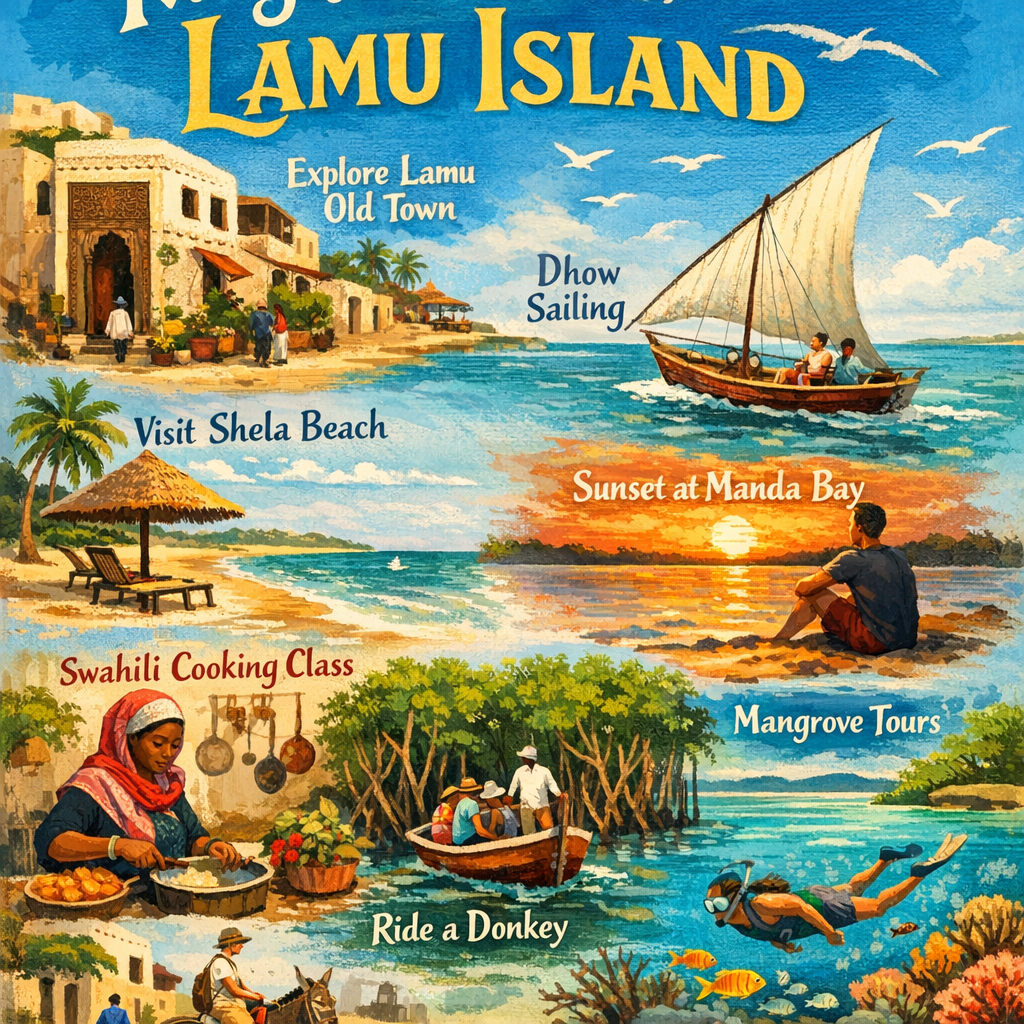
If you are wondering what to do in Lamu on your first day, start with a slow walk through Old Town. The narrow lanes, carved wooden doors, coral-stone houses, and tiny shops give a clear sense of the island’s long history as a Swahili trading hub. Hiring a local guide for a couple of hours helps you understand the stories behind the mosques, squares, and historic family homes.
Visit Lamu Museum and Cultural Sites
The Lamu Museum, housed in a former governor’s residence, is a useful first stop. Exhibits cover Swahili culture, traditional sailing, and local history. Nearby, the Swahili House Museum offers a glimpse into how wealthy families once lived, while the old fort, now a cultural center, is a good vantage point and gathering place for local events.
Sail on a Traditional Dhow at Sunset
An evening dhow trip on the channel between Lamu and Manda Island is one of the classic experiences here. As the wind fills the sail and the engines of the day fade, you drift past mangroves and shoreline villages in soft light. Some dhow trips include light snacks or dinner on board, but even a simple sail with a local captain is memorable.
Spend a Day at Shela Village and Beach
Explore the Sand Dunes and Takwa Ruins
Behind Shela, the dunes form a dramatic landscape that feels far from the bustle of the waterfront. Guided walks across the dunes are especially striking around sunrise or sunset. Across the channel on Manda Island, the Takwa Ruins showcase the remnants of an old Swahili settlement partly reclaimed by the forest. Visiting both in one trip gives a deeper sense of the region’s past and environment.
Go Island Hopping on a Day Cruise
For those looking for more varied attractions in this part of the coast, day trips by dhow or speedboat can take you to quieter beaches, snorkeling spots, and fishing grounds around the archipelago. Depending on the tides and weather, captains may include stops on Manda Toto, Kizingoni, or even further afield, combining swimming, picnics, and light fishing.
Join Local Life at the Waterfront
Sometimes the best things to do in Lamu are the simplest. Sit at the seafront in Lamu Town with a cup of strong Swahili tea and just watch. Boats unloading, fishermen mending nets, donkeys trotting by, elders in conversation on shaded benches. This easy people-watching is where the island’s rhythm really shows itself.
Hidden Gems
Sixtus Island and Quiet Sandbanks
Accessible on the right tide and with the right captain, small sandbanks and islets near the main channel offer a more secluded feel. Some are little more than patches of sand and shell, ideal for a short swim, quiet reading, or a simple picnic.
Local Mangrove Kayaking
Instead of only using motorized boats, consider a guided kayak trip through the mangroves. Paddling quietly lets you see wading birds, crabs, and shifting light on the water up close, with minimal disturbance to the ecosystem.
Backstreets of Shela
Most visitors head straight from Shela jetty to the beach, but the inner lanes reward wandering. You will find small boutiques, discreet art studios, and tucked-away cafés in restored Swahili houses, giving a more intimate sense of village life.
Local Home Food Experiences
Some families and small community groups host informal cooking sessions or home-style meals. These are not flashy, but they are a chance to learn how to prepare pilau, viazi karai, or coconut-based curries the local way, while supporting residents directly.
Best Beaches
The best places in Lamu for pure beach time are spread across the main island and nearby shores. Each has a slightly different character.
| Beach | Location | Best For | Notes |
| Shela Beach | Eastern side of Lamu Island | Long walks, swimming, sunrise/sunset | Easy access from Shela village, can be windy, watch tides and currents. |
| Lamu Town Waterfront | Main seafront, Lamu Town | Strolling, people-watching | Not ideal for swimming due to boat traffic; great for evening walks. |
| Kizingoni Beach | Far southwest of Lamu Island | Seclusion, relaxation | More remote; often reached by boat or longer walk, fewer people. |
| Manda Beach | Opposite Lamu Town on Manda Island | Swimming, sunset views | Short boat ride from Lamu; lovely channel views, some beachside spots to eat. |
Food and Culture
Lamu’s food is a central part of the experience. The cuisine leans heavily on fresh fish, coconut, spices, and rice dishes influenced by centuries of trade. Expect grilled octopus, fish curry, pilau, biryani, mahamri, and strong, spiced tea. Small street vendors sell samosas, bhajias, and sweets in the late afternoon, especially near the town square.
Culture here is deeply Swahili and predominantly Muslim, and daily life follows prayer times and a relatively conservative social code. Dress modestly in town and villages, especially away from the beach, and ask before photographing people. Greetings are valued; a simple “salaam aleikum” goes a long way. Festivals and religious events are important community moments; if you happen to be around for one, observe respectfully and follow local guidance.
Best Time to Visit
Lamu can be visited year-round, but wind, humidity, and sea conditions vary with the seasons.
| Season | Weather | Sea Conditions | Travel Notes |
| Warm and relatively dry | Sunny, humid but manageable | Generally calm, good for swimming and dhow trips | Comfortable for walking and beach time; book ahead for peak holiday periods. |
| Hot and humid | Higher temperatures, some showers | Mostly calm with occasional rough days | Quieter overall; good if you prefer fewer crowds and can handle heat. |
| Windy season | Cooling monsoon winds, less humidity | Wavier seas on exposed sides, good sailing winds | Nice for walking and sailing; some trips may depend on wind strength. |
| Short rains period | Intermittent showers, warm | Variable, often still swimmable | Landscapes look greener; showers usually do not last all day. |
Travel Tips
• Pack light, breathable clothing and a sarong or shawl for modesty in town and sun protection on boats.
• Use reef-safe sunscreen and avoid touching corals or disturbing marine life during snorkeling or swimming.
• Carry cash, as smaller shops and boats often do not accept cards; there are ATMs in Lamu Town, but they can be limited.
• Agree boat and donkey transport prices clearly before starting a journey to avoid misunderstandings.
• Walk in pairs or groups if returning late at night, mainly for navigation in dark, narrow alleys rather than safety concerns.
• Respect prayer times and avoid loud behavior near mosques, especially early in the morning and in the evening.
1–3 Day Itinerary
One Day
Start with a morning walk through Lamu Old Town, visiting the museum and fort with a local guide. Have lunch along the waterfront, then take a short boat to Manda Beach for a swim and quiet afternoon. Return in time for an early evening stroll by the seafront and dinner at a simple Swahili restaurant.
Two Days
On day one, follow the one-day outline. On day two, head to Shela by morning, explore the village, and spend time on Shela Beach. Arrange a late afternoon walk on the dunes, then join a sunset dhow cruise in the channel. Finish with dinner in Shela before returning by boat or staying the night there.
Three Days
Use the first two days as above. On day three, plan a longer excursion: a visit to Takwa Ruins on Manda Island combined with swimming and a picnic, or a mangrove and sandbank trip with snorkeling where possible. In the evening, keep it slow: tea at the seafront, a final wander through the alleys, and some last-minute shopping for handicrafts such as carved boxes or kikois.
FAQs
Is Lamu safe for travelers
Most visitors find Lamu calm and welcoming. As with any destination, it is wise to stay aware of your surroundings, keep valuables secure, and follow local advice. Stick to registered boats and licensed accommodation, and check current travel guidance before your trip.
How many days do I need
Two to three days is enough to see the main attractions in Lamu and Shela, but four to five days allows time for proper unwinding, island hopping, and slower exploration without feeling rushed.
Can I swim in the sea
Yes, swimming is common at beaches like Shela, Manda, and Kizingoni, though conditions vary with tides, winds, and currents. Ask locals or your host about the safest spots and times, and be cautious on very windy or rough days.
What should I wear
Light, breathable clothes work best. On the beach, normal swimwear is fine, but in town and villages it is respectful to cover shoulders and knees. A loose shirt and long skirt or trousers are ideal for both comfort and cultural sensitivity.
Do I need a guide
You can explore independently, but hiring a guide, even briefly, adds context and supports local livelihoods. For Old Town walks, ruins, dune hikes, or mangrove trips, a guide can enrich the experience and help you navigate tides and timings.
Where to Stay
Budget options include simple guesthouses in Lamu Town or Shela, often family-run, with basic but comfortable rooms and easy access to local food. These are good for travelers prioritizing culture and affordability over amenities.
Mid-range travelers will find characterful Swahili-style boutique hotels and apartments, some with inner courtyards, rooftop terraces, or small pools. Many are restored traditional houses that balance comfort with a sense of place.
For a more secluded stay, luxury lodges and private villas are dotted around Shela and the quieter stretches of Lamu and Manda. These tend to offer spacious rooms, attentive service, and direct beach or waterfront access, often appealing to longer stays and groups. Regardless of budget, booking in advance is recommended, especially during school holidays and festive periods.
How to Get There
The most practical way to reach the island is by air. Several domestic flights connect Nairobi and other Kenyan towns to airports on Manda Island, just across the channel. From Manda, a short boat ride brings you to either Lamu Town or Shela, with boats available at the jetty.
For those already on the coast, it is possible to travel overland to the mainland opposite Lamu and then transfer by boat, but routes and security conditions can change, so local, up-to-date advice is essential. Once you arrive, movement is straightforward: walking for short distances, donkeys for luggage and some transport, and small boats for trips between villages and neighboring islands.
Traveling to Lamu rewards those who are patient and open to slower, more grounded experiences. With respect for local culture and the fragile coastal environment, it offers a gentle but deep introduction to the Swahili coast that lingers long after you leave.
This Post Has 5 Comments
Comments are closed.