Introduction
Manda Bay sits quietly across the channel from Lamu Island on Kenya’s north coast, where mangroves, sandbars, and coral shallows shape a slow, tidal rhythm. It is less a single “resort” and more a wild, protected corner of the Indian Ocean, with empty beaches, dhow sails on the horizon, and star-filled nights.
This guide looks at what to do in and around Manda Bay, from sailing and snorkeling to culture and birdlife. It is written for travelers who prefer nature, space, and honest coastal experiences over nightlife and crowds. Whether you are a Kenyan planning a long weekend or an international visitor adding the coast to a safari, Manda Bay offers a calm, low-key escape.
Why Visit
• Quiet, uncrowded coastline with long walks, safe swimming, and natural scenery rather than built-up resorts.
• Easy access to Lamu’s Swahili heritage, architecture, and culture, while staying somewhere more secluded.
• Excellent mix of activities: sailing, snorkeling, fishing, birdwatching, kayaking, and simple beach time.
• Strong conservation presence, including protected mangroves, turtle nesting beaches, and marine life.
• Small-scale, owner-run lodges that prioritize sustainability, local employment, and low-impact tourism.
Top Things to Do
Explore the channels by dhow or boat
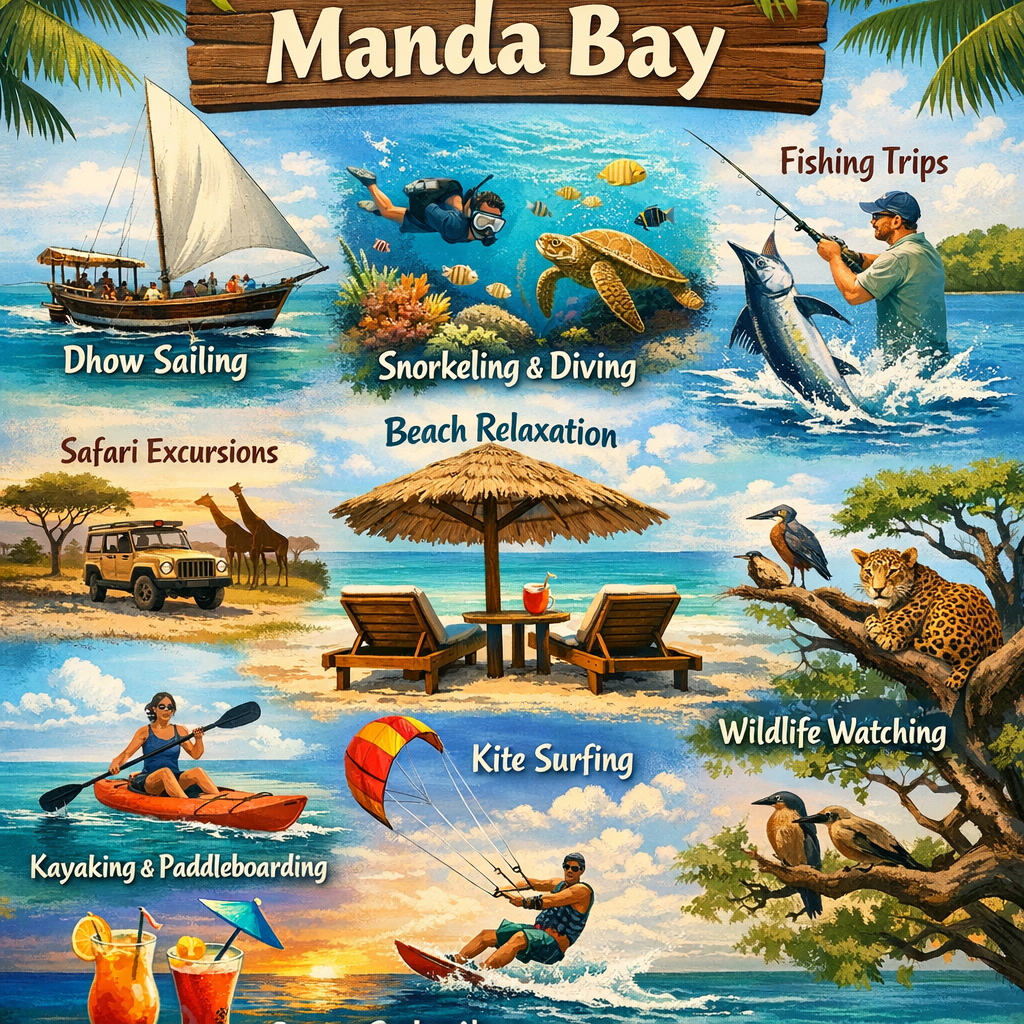
One of the signature things to do in Manda Bay is to head out by dhow or small motorboat through the tidal channels. You glide past mangrove forests, sandbanks, and tiny islets while fish eagles call overhead. Late afternoon trips are particularly rewarding, when the light softens and fishermen return with their catch.
Many local boatmen operate from both Manda and Lamu, and hiring them directly supports families in the archipelago. Expect simple, well-used boats and a relaxed pace rather than polished, packaged tours.
Snorkel and swim on the outer reefs
Clear, shallow waters and coral heads just off Manda and the neighboring islands make for easy snorkeling. You are likely to encounter reef fish, rays, and healthy coral gardens if visibility is good. Some lodges provide masks and fins; otherwise, bring your own gear if you are particular about fit.
Conditions change with tides and wind, so plan reef trips for calmer, mid-tide windows. Ask local guides about the best sites and timings rather than relying on fixed schedules.
Kayak or paddleboard the mangroves
Mangrove channels on the landward side offer a quieter, more intimate way to experience Manda Bay. Kayaks and stand-up paddleboards allow you to slip into narrow creeks where birdlife is abundant and the water is often glassy at dawn.
This is one of the best activities in Manda for those who enjoy silence and slow travel. Move gently, keep voices low, and you will often see kingfishers, crabs, and small fish at very close range.
Visit Lamu Old Town
Lamu, across the water, is one of the most important cultural attractions in the region. From Manda, it is a short boat ride to the town jetty. Once there, you can wander through narrow, shaded streets, visit restored Swahili houses, and sit in small cafés overlooking the water.
Dress modestly, especially away from the seafront, as this is a conservative Muslim community. Long skirts or trousers and covered shoulders are appreciated, and you will find interactions more relaxed when you show this respect.
Cast a line: fishing in Manda Bay waters
Fishing is a long-standing livelihood here and also a rewarding activity for visitors. Depending on your interest, you can try handline fishing from a small boat, or arrange more specialized trips targeting larger game fish further offshore.
Choose operators who practice catch-and-release for larger species and who avoid sensitive reef areas. Many lodges work with local skippers who know the waters well and can balance tradition with sustainability.
Sunrise and sunset beach walks
One of the simplest pleasures in Manda is walking the beach at first light or just before dark. At low tide, the sand stretches out, revealing tidal pools and patterns in the flats. In the evenings, temperatures ease, and the sky often turns soft pink or orange.
If you are staying on the northern or eastern shores, carry a light wrap or kanga for the wind. Early walks are especially rewarding for birdwatchers, with herons, plovers, and oystercatchers foraging along the shore.
Stargazing and quiet evenings by the water
With minimal light pollution, nights around Manda Bay can be remarkably clear. Most lodges keep lighting low, and once the generators are off, the sky opens up. Lying on the sand or on a jetty at night, listening to the water and watching the stars, is often a highlight for travelers used to city life.
This is also when you are likely to hear traditional coastal music drifting across the water from villages or Lamu town on still nights, adding a subtle cultural backdrop to the natural setting.
Hidden Gems
Secret sandbars at low tide
When the tide drops, white sandbars rise out of the bay, forming temporary islands perfect for a swim and a short wander. Ask boatmen about tide times and safe access. Arrive early, carry your own drinking water, and leave nothing behind when you depart.
Birding in back mangrove creeks
Away from the main channels, smaller mangrove creeks host impressive birdlife. Local guides who fish these waters daily know where to find heron roosts, kingfisher perches, and wader feeding grounds. A slow drift through these backwaters can feel like a private nature documentary episode.
Traditional villages on Manda Island
Several small villages on Manda still follow a largely traditional rhythm, with fishing, small-scale farming, and boat building. Visits arranged respectfully, through your lodge or trusted local contacts, can include short walks, conversations with elders, or seeing how wooden dhows are maintained.
Ruined sites tucked in the bush
Like much of the northern coast, the wider Lamu archipelago has scattered ruins from earlier Swahili settlements. While not as developed as famous sites further south, locals can sometimes guide you to crumbling stone walls and forgotten wells hidden in the bush, offering a quiet sense of layered history.
Best Beaches
The coastline around Manda Bay is a mix of long, walkable beaches, quieter coves, and tidal flats. Here is an overview of some of the best places to swim, walk, or simply sit by the water.
| Beach | Location | Best For | Notes |
|---|---|---|---|
| Manda Bay main beach | Eastern shore of Manda | Swimming, sunrise walks | Calm waters, easy access from most lodges, good for families. |
| Sandbar beaches | Mid-bay, exposed at low tide | Short visits, swimming | Accessible only by boat; always check tide times and leave no trace. |
| Channel-facing beach | Facing Lamu Island | Views, dhow watching | Stronger currents; better for strolling and photography than swimming. |
| Remote northern shore | Less-developed section of Manda | Solitude, birdwatching | Fewer facilities; bring water and sun protection; best with a guide. |
Food and Culture
The food around Manda Bay draws heavily from Swahili coastal traditions: fresh seafood, coconut, local limes, and gently spiced stews. Expect dishes such as coconut fish curry, octopus in rich sauces, pilau rice, and flatbreads like chapati and mahamri for breakfast.
Many ingredients come directly from local fishermen and small markets in Lamu town, so menus reflect what is available rather than fixed international offerings. If you have dietary restrictions, mention them early; small kitchens are usually flexible, but planning ahead helps.
Cultural rhythms are shaped by Islam and Swahili heritage. The call to prayer, modest dress, and a general sense of calm are part of daily life. Public displays of affection are best kept discreet, and alcohol is mainly consumed within private lodge spaces, not in village areas.
Conversations with staff, boatmen, and guides are often the most rewarding cultural experiences. Many are happy to share stories about fishing, festivals, language, and how life has changed with tourism, as long as interactions remain mutual and respectful.
Best Time to Visit
Manda Bay can be visited year-round, but sea conditions, wind, and temperatures vary through the seasons. The table below offers a general guide; local variations are normal, so combine this with current advice when planning.
| Season | Conditions | Highlights | Considerations |
|---|---|---|---|
| Dry, calmer months | Warm, relatively dry air, lighter winds, clearer seas | Best for snorkeling, beach time, sailing, and relaxed boat trips. | More popular; advance booking is wise, especially at smaller lodges. |
| Hot, humid period | Higher temperatures, some haze, occasional showers | Good swimming conditions, quieter atmosphere, fewer visitors. | Heat can be intense midday; plan activities for mornings and late afternoons. |
| Windier months | Stronger coastal winds, choppier seas | Comfortable air temperatures, dramatic skies, great for sailing enthusiasts. | Some offshore trips may be limited; expect more movement on boats. |
| Short rainy spells | Intermittent showers, lush vegetation | Cooler moments, vivid greens, very peaceful for those who do not mind some rain. | Occasional downpours can disrupt sea trips; bring a light waterproof layer. |
Travel Tips
• Pack light, breathable clothing, a wide-brimmed hat, and reef-safe sunscreen; the sun can be intense even on cloudy days.
• Carry cash in Kenyan shillings for tips, boats, and small purchases; card facilities are limited or absent in many places.
• Respect local culture by dressing modestly when visiting Lamu town or villages, and asking before taking photos of people.
• If you are prone to seasickness, bring suitable medication; boats are a core part of getting around.
• Use refillable water bottles where possible and follow lodge guidance on conserving water and power, as resources are limited.
• Travel with basic medical supplies, including any personal medications, as pharmacies are concentrated in Lamu town and bigger centers.
1–3 Day Itinerary
For a short stay, it helps to balance activity with unstructured time. Here is a simple framework you can adapt depending on tides and weather.
Day 1: Arrive by boat from the mainland or Lamu and settle into your lodge. Spend the afternoon walking the main beach and getting to know the tides. In the late afternoon, take a short boat trip through nearby channels, ending with sunset on the water. Dinner can feature local seafood, followed by a quiet evening of stargazing.
Day 2: Start early with a kayak or paddleboard session in the mangroves while it is cool and still. After breakfast, head to the outer reef for snorkeling if conditions allow, or simply enjoy swimming and reading by the shore. In the afternoon, cross to Lamu Old Town for a few hours of exploring, coffee, and street-side snacks before returning to Manda at dusk.
Day 3: If your schedule allows, plan a half-day fishing or sandbar excursion. Visit a low-tide sandbank, swim, and then drift back for a slow lunch. The rest of the day is ideal for a final beach walk, some last photographs, and packing at an unhurried pace before your boat transfer out.
FAQs
Is Manda Bay suitable for children?
Yes, especially for children who enjoy nature and the sea rather than theme-park style entertainment. Calm sections of beach and small-group lodges make it manageable for families, though constant supervision around water is essential.
Do I need to be a strong swimmer?
Basic swimming ability is helpful, as many activities involve boats and the sea. However, there are shallow areas for wading and floating. Always use lifejackets on boats and follow local advice on currents and safe swimming spots.
What should I wear in and around Manda Bay?
On the beach and at lodges, usual coastal clothing is fine: swimwear, shorts, and light shirts. For visits to Lamu town or villages, choose modest, loose clothing that covers shoulders and at least to the knee, out of respect for local customs.
Is there good mobile network and internet?
Mobile coverage is generally available but can be patchy in some corners. Lodges sometimes offer Wi-Fi, though speeds vary and connections may be intermittent. It is best to treat this as a semi-offline break.
Can I combine Manda Bay with a safari?
Yes. Many travelers visit inland parks such as Tsavo, the Mara, or northern conservancies, then fly to the coast. The calm of Manda Bay pairs well with the intensity of wildlife viewing, offering a gentle way to end a safari journey.
Where to Stay
Accommodation around Manda Bay leans towards small, characterful places rather than large resorts. Options are limited in number, so booking ahead is sensible.
Budget: Simple guesthouses and rooms in nearby Lamu or Shela can be more affordable, with daily boat transfers to Manda for activities. This works well if you want access to both cultural attractions and quieter beaches but are willing to commute by water.
Mid-range: Small, owner-managed properties on Manda or neighboring islands provide comfortable rooms, good food, and guided activities. These often include meals and some boat excursions in the rate, and they tend to emphasize sustainability and local employment.
Luxury: A handful of higher-end lodges and private houses cater to travelers seeking seclusion, full-board stays, and tailored experiences such as private dhow trips, deep sea fishing, and personalized menus. Stays here feel more like being a guest in a large coastal home than in a hotel.
How to Get There
The usual access route is via Lamu, which is linked to Nairobi and other Kenyan hubs by scheduled flights to Manda airstrip. From the airstrip, a short boat ride across the channel brings you to your lodge or onward connection. Some properties arrange this transfer as part of the stay.
For overland travelers, it is possible to reach the wider Lamu area by road and then transfer to boats, though this is more time-consuming and requires up-to-date security and road condition information. Most visitors, especially those on tight schedules, choose to fly.
Once in the area, movement is almost entirely by boat or on foot. There are no cars on Manda’s beaches, which is part of its appeal. Plan to travel light, protect luggage from spray with dry bags if possible, and be comfortable with getting in and out of small boats at simple jetties or directly on the sand.
This Post Has 5 Comments
Comments are closed.