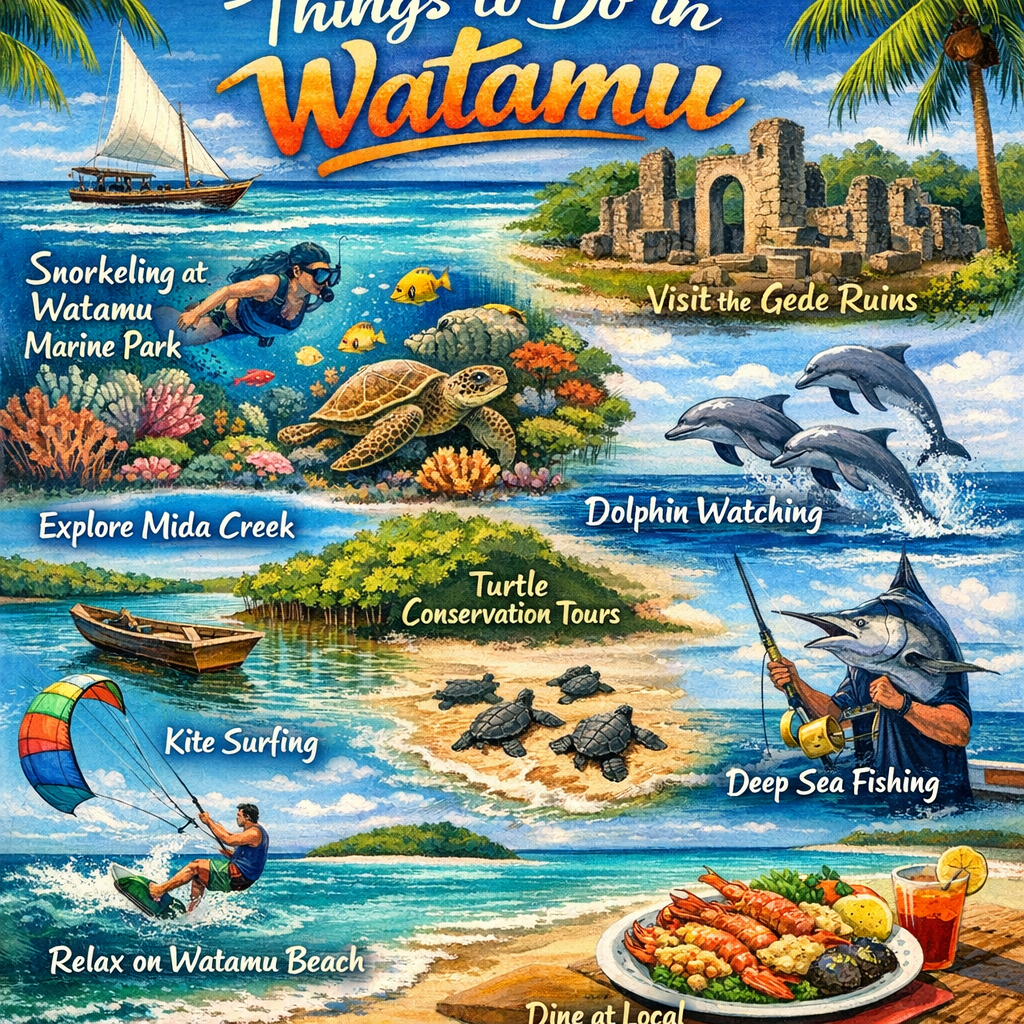
Introduction
Watamu is a small, laid-back coastal village between Malindi and Kilifi, framed by white-sand beaches, coral reefs, and coastal forest. It is quieter than the big resort towns, but that is exactly its strength. Here, you can spend the morning snorkeling with turtles, the afternoon in an Arabuko Sokoke forest trail, and the evening watching the tide pull back across the mangroves of Mida Creek.
For Kenyan travelers, it is an easy, relaxed escape with plenty of self-drive options and simple local eateries. For international visitors, it offers some of the most accessible marine and birdlife experiences on the Kenyan coast, without the heavy crowds. This guide walks through the most interesting things to do in Watamu, from the obvious highlights to quieter corners that locals tend to keep to themselves.
Why Visit
• A compact coastal village with some of the best beaches in Kenya, yet far less hectic than larger resort towns.
• Direct access to Watamu Marine National Park, with excellent snorkeling, diving, and glass-bottom boat trips.
• Close proximity to Arabuko Sokoke Forest, Mida Creek, and Gede Ruins for a mix of nature, history, and culture.
• Good range of accommodation, from simple bandas and apartments to boutique eco-lodges and private villas.
• Easy to combine with a classic bush safari in Tsavo, Maasai Mara, or Amboseli for a coast-and-safari itinerary.
Top Things to Do
Explore Watamu Marine National Park
The marine park is the heart of most trips here. Protected waters, shallow reefs, and clear visibility make it one of the most enjoyable marine attractions in Watamu for both beginners and experienced swimmers. Join a licensed glass-bottom boat operator from the main beach, snorkel over vibrant coral gardens, and watch parrotfish, angelfish, and occasional turtles glide by. Early morning trips are calmer and usually less crowded.
Snorkeling and Diving with Local Operators
Beyond the standard marine park tour, consider arranging a guided snorkeling or diving session with a reputable dive center. They know the healthier, less trafficked patches of reef and will time outings with the tides. If you are new to diving, Watamu is a gentle place to do a discovery dive or get certified, especially during calmer sea conditions when visibility is better.
Birding and Sunset at Mida Creek
Mida Creek is a tidal lagoon of mangroves, sandbanks, and mudflats that changes character with the light and tide. It is one of the best places in the area for birders, with flamingos, waders, and migratory species feeding in the shallows. Walk the raised boardwalk, hire a traditional dhow or canoe, and time your visit to catch a slow sunset as the sky shifts over the mangrove silhouettes.
Walk the Ruins of Gede
A short drive inland, Gede Ruins tells the story of a Swahili city that once thrived on Indian Ocean trade before it was abandoned. Shady forest paths weave past crumbling stone houses, mosques, and a palace complex. Go with a local guide; they are usually excellent storytellers and will help place what you see in the wider history of the Swahili coast.
Forest Trails in Arabuko Sokoke
Arabuko Sokoke Forest is one of the last significant coastal forests in East Africa, home to endemic bird species, elephants, and rare mammals like the golden-rumped elephant shrew. This is not a big-game destination in the classic safari sense, but rather a quiet, atmospheric forest walk. Go early in the morning with a guide from KWS or community groups, and combine birding with a stop at one of the viewpoints over the forest canopy.
Sandbank and Island Adventures
When the tide drops, sandbanks emerge offshore, creating picture-perfect strips of white sand in the middle of the sea. Local boat captains know exactly when and where they appear. Arrange a morning trip to relax, swim, and explore before the tide returns. Some tours include simple grilled fish or coconut rice prepared on the boat or at a nearby beach shack.
Kite Surfing and Water Sports
During the windy seasons, sections of the coastline turn into a playground for kite surfers. Several schools along Watamu Beach offer equipment rental and lessons. If you prefer something calmer, consider stand-up paddle boarding in the sheltered creeks, or a quiet kayak paddle through the mangroves to observe crabs, birds, and the changing tide.
Hidden Gems
Quiet Corners of Short Beach and Jacaranda
North of the main village, there are stretches of quieter shoreline near Jacaranda and Short Beach. Fewer hotels mean fewer beach vendors and a more local feel. It is worth the short drive if you want a long, unbroken walk with just fishermen and seabirds for company.
Local Fish Market Visits
Early morning at the local landing sites can be fascinating. You might see fishermen bringing in octopus, small tuna, and reef fish, while local buyers inspect the catch. Ask politely before taking photos and consider buying some fresh fish to take to your guesthouse or a nearby restaurant that is happy to grill it for you.
Community Conservation Projects
Several community and conservation initiatives operate in and around the village, focusing on turtles, mangroves, and reef restoration. Arranging a short visit or volunteering half a day can give a deeper understanding of the delicate balance between tourism, fishing, and conservation in the area.
Quiet Coastal Villages Nearby
If you have your own car, explore the back roads toward Kilifi or Malindi, stopping at small, roadside cafes and viewpoints along the way. This is a good way to see daily coastal life beyond the beach: coconut harvesters, traditional homes, and small markets selling seasonal fruit and snacks.
Best Beaches
The coastline here is broken into several named sections, each with its own character. Below is a simple overview to help you choose where to spend your time.
| Beach | Main Highlights | Best For |
|---|---|---|
| Watamu Beach (Main) | Easy access to marine park, glass-bottom boats, restaurants nearby | First-time visitors, families, snorkeling trips |
| Turtle Bay | Adjacent to marine park, calm waters, close to several hotels | Swimming, relaxed walks, simple water sports |
| Blue Lagoon | Sheltered cove, tidal pools, small bars and cafés | Casual sundowners, sheltered swimming at mid-tide |
| Jacaranda / Short Beach | Quieter, fewer developments, long open stretches | Peaceful walks, photography, sunrise and sunset views |
Food and Culture
Food here is a straightforward mix of Swahili, coastal Kenyan, and some Italian influences, thanks to a long history of Italian visitors and residents. Expect fresh seafood, coconut-based curries, pilau, chapati, and simple grilled fish served with kachumbari and sukuma wiki.
Beachfront spots often lean toward pizza, pasta, and fish dishes, while local cafés in the village serve chapati, beef stew, beans, and tea at very reasonable prices. For a more immersive cultural experience, seek out small Swahili eateries and ask what is fresh that day instead of sticking to a printed menu.
Dress is generally casual, but away from the beach it is appreciated if you cover shoulders and knees, especially when walking through the main village or visiting markets. A few words of Swahili go a long way: greetings like “Jambo” or “Habari” are always welcomed.
Best Time to Visit
The coast is warm year-round, but sea conditions, humidity, and rainfall vary. This table gives a general overview; always check recent local conditions if your plans depend on specific activities like kite surfing or diving.
| Season | Weather | Pros | Considerations |
|---|---|---|---|
| Dry and Warm | Sunny, moderate humidity, relatively calm seas | Good for beach time, snorkeling, forest walks | More visitors, higher demand for popular lodges |
| Hot and Humid | Higher temperatures, some showers | Warm sea, lush landscapes, fewer crowds than peak holidays | Humidity can be tiring, choose accommodation with good ventilation |
| Long Rains | Frequent showers, occasional storms, rougher sea | Quiet beaches, lower prices, dramatic skies | Some marine trips may be limited, muddy inland roads |
| Short Rains | Intermittent showers, often sunny between rains | Green landscapes, mix of beach and inland activities | Unpredictable showers, carry light rain gear |
Travel Tips
• Tides matter: plan snorkeling, sandbank visits, and some beach walks around tide times, which local operators can advise on.
• Sun protection is essential: the coastal sun is strong even on cloudy days, so bring reef-safe sunscreen, a hat, and light clothing.
• Respect marine life: avoid standing on coral, chasing turtles, or touching starfish and other creatures during snorkeling trips.
• Cash and payments: mobile money is common in Kenya, but carry some cash for small shops, tuk-tuks, and local markets.
• Safety: the main beach areas are generally safe during the day; at night, use registered tuk-tuks or taxis and keep valuables secure.
• Local guides: hiring community or KWS guides for forests, creeks, and ruins enriches the experience and supports conservation.
One to Three Day Itinerary
For a short trip, it helps to balance marine, cultural, and forest experiences without rushing.
Day 1: Arrive, settle into your accommodation, and take a relaxed walk along the nearest stretch of beach to understand the tides and currents. In the late afternoon, head into the village for a simple Swahili dinner and an early night.
Day 2: Join a morning boat trip into Watamu Marine National Park for snorkeling or a glass-bottom boat ride. Spend the midday hours resting, then in the late afternoon visit Mida Creek. Walk the boardwalk, look for birds, and, if possible, take a short dhow cruise to watch the sunset over the mangroves.
Day 3: Start early with a drive to Gede Ruins and explore with a local guide before the day gets hot. Continue on to Arabuko Sokoke Forest for a half-day walk or birding excursion. Return to the coast in the afternoon for one last swim or a quiet beach stroll before departure.
If you have more time, add an extra day simply to slow down: a second marine outing, a visit to quieter beaches, or a casual exploration of nearby villages by tuk-tuk.
FAQs
Is Watamu suitable for families with children
Yes. The protected marine park, shallow sections of beach at low tide, and calm village atmosphere make it family-friendly. Always supervise children in the water and pay attention to tides and currents.
Do I need to be a strong swimmer to enjoy the marine park
Not necessarily. Many boat operators provide life jackets and floatation devices, and some guests simply view the reef from glass-bottom boats. If you are not confident, mention this to the crew so they can choose gentle spots.
Are there ATMs and shops in the village
There are a few ATMs and small supermarkets for basic supplies. For a wider range of banking services or shopping, nearby Malindi town offers more options.
Can I visit from Nairobi for a long weekend
Yes. Flights to Malindi or the SGR train to Kilifi or Mombasa, combined with a road transfer, make a long weekend practical. Many Kenyans drive down as well, often combining the trip with other coastal stops.
Is it easy to get around without a car
Within the village and along the main coastal road, tuk-tuks and boda bodas (motorbike taxis) are common and affordable. For Gede, Arabuko Sokoke, or more remote beaches, it can be helpful to arrange transport through your accommodation or hire a taxi for a half day.
Where to Stay
Budget travelers will find simple guesthouses, hostels, and self-catering apartments in and around the village. These are good if you plan to spend most of your time outdoors and just need a clean, secure base with a fan and mosquito net.
Mid-range options include small hotels and boutique lodges close to the main beach or Turtle Bay. These often offer pools, on-site restaurants, and easy access to marine park activities without feeling overly built-up.
For luxury stays, there are stylish villas and higher-end lodges, some perched on quiet headlands or hidden among the coastal forest. Many prioritize privacy, sea views, and attentive but understated service, making them suitable for longer stays or a relaxed end to a safari.
How to Get There
From Nairobi and other major cities, the simplest approach is to fly to Malindi Airport, then take a taxi or pre-arranged transfer for the short drive south. The road between Malindi and the village is tarmacked and generally in good condition.
If you are already on the coast, the coastal road from Mombasa, Kilifi, and Malindi is straightforward. Self-drivers should watch for speed bumps, livestock, and slow-moving traffic in the smaller towns. Public transport options include matatus to nearby towns and tuk-tuks or boda bodas for the final stretches.
Some travelers also connect a visit with a safari in Tsavo by road, making the coast a natural next step after a few days in the bush. However you arrive, the final stretch always feels the same: the air gets saltier, the palms appear, and life starts to slow down as the sea comes into view.
This Post Has 5 Comments
Comments are closed.