Introduction
Diani Beach on Kenya’s south coast is where white sand, warm Indian Ocean water, and coastal forests all meet in a surprisingly relaxed way. It is a place where you can snorkel over coral in the morning, wander through a sacred kaya forest at midday, and end the day in a simple beach bar with grilled fish and a quiet sea breeze.
This guide walks you through what to do in Diani, from the well‑known highlights to quieter corners that many visitors miss. Whether you are a Kenyan planning a coastal weekend or an international traveller on your first trip to East Africa, you will find practical, honest tips to help you plan your time by the sea.
Why Visit
• Long, wide sandy beaches with warm, shallow water and good swimming conditions along most stretches.
• Reliable marine activities, including snorkeling, diving, kitesurfing, and dhow trips to nearby reefs and sandbanks.
• Easy access from Mombasa yet a calmer, more relaxed feel than the busier north coast.
• Rich coastal culture, from Swahili food to traditional fishing villages and sacred forests.
• A good mix of budget rooms, small guesthouses, family villas, and discreet high‑end lodges.
Top Things to Do
Explore the main beach
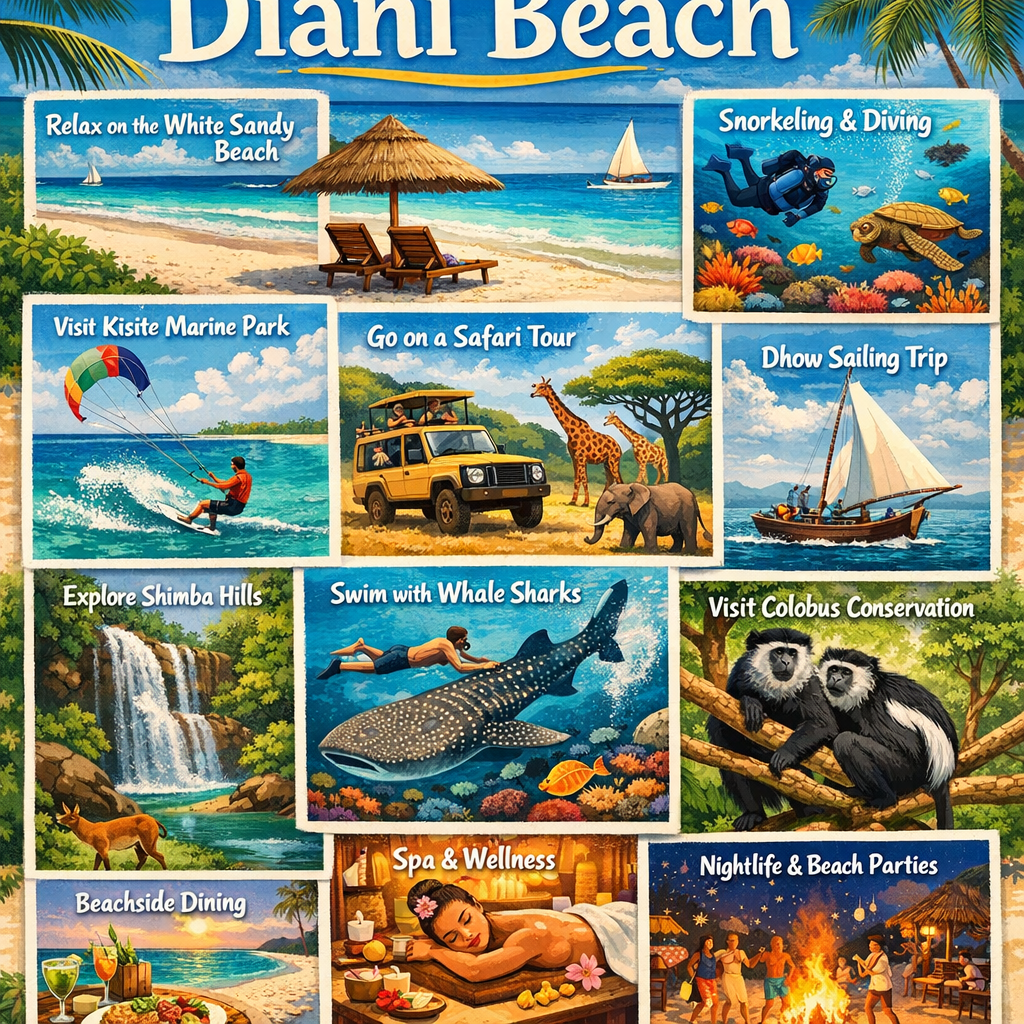
The core stretch of Diani runs for several kilometres, with powdery sand and palm trees lining the shore. Early morning is the best time for a long walk, when the light is soft and the beach is almost empty. At low tide, you can walk far out on the exposed sand and seagrass, watching local women collecting shellfish and fishermen preparing their dugout canoes.
Snorkel and dive the coral reef
A fringing reef protects much of the coastline, creating calm water inside and brighter coral gardens outside. Simple glass‑bottom boat trips take you to shallow snorkelling spots where you can see parrotfish, butterflyfish, and the occasional turtle. For certified divers, local dive centres offer trips to outer reefs and drop‑offs with better visibility and a chance of larger marine life.
Take a dhow trip to Kisite Marine Park
One of the classic things to do in Diani is a full‑day dhow excursion to Kisite–Mpunguti Marine Park, usually starting from Shimoni. Traditional wooden boats sail or motor out to clear turquoise water where you can snorkel over healthy coral and, in season, sometimes see dolphins. Most trips include a Swahili seafood lunch on Wasini Island and a short village walk.
Visit Shimba Hills National Reserve
When you want a break from the beach, Shimba Hills lies inland, with rolling hills, forest, and cooler air. It is known for rare sable antelope, elephants, and scenic viewpoints over the coastal plain. Day trips from Diani typically include a game drive and, if conditions allow, a hike down to Sheldrick Falls. It is not a big‑game powerhouse like the Mara, but it offers a gentle, quieter kind of safari.
Learn to kitesurf or windsurf
Steady coastal winds and shallow lagoons make parts of Diani ideal for water sports. Several schools along the beach offer kitesurfing lessons for beginners and equipment rental for experienced riders. Even if you do not take part, watching colourful kites darting across the lagoon at sunset is a pleasant way to end the day.
Encounter rescued primates at Colobus Conservation
Colobus Conservation is a small, non‑profit centre working to protect endangered Angolan colobus monkeys and other primates along the south coast. A guided visit offers insight into local wildlife rescue, the challenges of habitat loss, and how simple measures like wildlife bridges over roads make a difference. It is a good option if you are interested in conservation beyond safari parks.
Enjoy the coastal nightlife
Diani’s nightlife is relaxed rather than wild. There are beachfront bars with live music, simple local joints with cold beer and nyama choma, and a few more polished venues with DJs on weekends. The scene changes over time, so it is worth asking your hotel or driver where locals are currently going out.
Hidden Gems
Kaya Kinondo Sacred Forest
Kaya Kinondo is a remnant of the original coastal forest and an important spiritual site for the local Digo community. Guided walks with community members explain the cultural significance of the kaya, traditional uses of plants, and how modern life is reshaping old customs. Dress modestly, move quietly, and follow your guide’s instructions, as this is still a living sacred space.
Tiwi Beach rock pools
Just north of Diani, Tiwi Beach feels more secluded and less developed. At low tide, natural rock pools form along parts of the shore, acting like small aquariums filled with fish, crabs, and sea urchins. It is a peaceful spot to explore if you like quieter places and do not mind fewer facilities.
Sandbar walks at Galu
On the southern side of Diani, around Galu, huge sandbars emerge at low tide. Local guides sometimes offer short walks out onto these temporary islands, timing them carefully with the tide. The water here is usually very clear, and the views back towards the beach and forest are especially good in the late afternoon.
Village markets and local kiosks
Step away from the beach road and you will find small markets selling fresh fruit, chapati, mandazi, and coastal snacks. It is an easy way to see everyday life and to support local vendors directly. Ask a taxi or boda boda to drop you at a busy, visible market and carry small cash for purchases.
Best Beaches
The coastline around Diani is broken into several named sections, each with a slightly different character.
| Beach | Vibe | Best For | Good To Know |
|---|---|---|---|
| Central Diani | Lively, mixed crowd | Swimming, casual walks, bars and cafes | Most hotels located here, beach can be busier at peak times |
| Galu Beach | Quieter, more natural | Kitesurfing, long walks, relaxed stays | Fewer shops; ideal if you prefer space and calm |
| Tiwi Beach | Low‑key, local feel | Rock pools, picnics, quiet time | Limited facilities; carry water and snacks |
| South Diani | Spread‑out, residential | Private villas, peaceful swims | Good choice for families and longer stays |
Food and Culture
Coastal Kenya has a distinct identity shaped by Swahili, Arab, and African influences, and you will see that clearly in the food. Look out for simple seafood grills, biryani, pilau, coconut‑based curries, and snacks like bhajia and samosa sold at small stalls.
Beachfront restaurants tend to be more international, while places along the main road and in nearby centres are better for local dishes at everyday prices. Tea is usually served sweet and milky, and fresh juices from mango, passion, and tamarind are common.
Dress codes along the beach are relaxed, but when visiting villages, markets, or Kaya Kinondo, it is respectful to dress modestly: shoulders and knees covered, especially for women. Basic Swahili greetings such as “jambo” or “habari” are appreciated, and taking a moment to greet people before asking questions reflects local etiquette.
Best Time to Visit
Diani is warm year‑round, with the Indian Ocean moderating temperatures. What changes most are rainfall and sea conditions.
| Period | Weather | Sea Conditions | Travel Notes |
|---|---|---|---|
| Jan – Feb | Hot, generally dry | Calm, clear, good for snorkeling | Popular holiday period; book ahead for top stays |
| Mar – May | Long rains, humid | Rougher seas at times, variable visibility | Quieter, some smaller properties may close for maintenance |
| Jun – Sep | Warm, less humid | Often moderate winds, good for kitesurfing | Comfortable for active trips and inland excursions |
| Oct – Dec | Short rains, generally mixed | Conditions can be very good between showers | Green landscapes and fewer crowds outside peak holidays |
Travel Tips
• Tide times shape many activities; always check them before planning snorkelling or sandbar walks.
• Sun can be intense even on cloudy days; carry a hat, high‑factor sunscreen, and drink plenty of water.
• Agree tuk‑tuk or boda boda fares before starting your ride, especially at night.
• Dress modestly away from the beach and ask before photographing people, religious sites, or homes.
• Use reef‑safe sunscreen and avoid standing on coral to help protect local marine life.
• ATMs are available but not everywhere; carry some cash for markets, tips, and small eateries.
1–3 Day Itinerary
One day
Start with an early walk along the main beach, then join a mid‑morning snorkelling or glass‑bottom boat trip to the nearby reef. After a simple Swahili lunch on the beach, spend the afternoon resting or exploring the shoreline at low tide. Finish with a relaxed dinner at a seaside restaurant, trying grilled fish or a coconut curry.
Two days
On your second day, head inland to Shimba Hills for a game drive and views over the coast. Return in the late afternoon and stop at a local market on the way back for fruit and snacks. In the evening, sample a different side of the coast with a meal at a more local eatery along the main road and perhaps a quiet drink at a beach bar.
Three days
With a third day, consider a visit to Kaya Kinondo in the morning to learn about Digo culture and forest traditions. In the afternoon, relax at Galu or Tiwi, depending on whether you prefer a more open sandy stretch or rocky pools. If you are interested in conservation, fit in a short visit to Colobus Conservation, then close your trip with a final sunset swim or dhow cruise.
FAQs
Is Diani Beach safe for swimming
Most sections are safe for swimming when the sea is calm, especially inside the reef where the water is shallower. However, currents can be strong at times, so follow local advice, stay near others, and avoid swimming alone far from shore.
Do I need a 4×4 vehicle in Diani
For staying within the beach area and moving between hotels, a 4×4 is not necessary. Regular taxis, tuk‑tuks, and bodas are enough. If you plan to visit Shimba Hills or other rougher roads, a higher‑clearance vehicle can be more comfortable but is not always essential.
Can I visit Diani on a budget
Yes. There are simple guesthouses, self‑catering apartments, and local eateries offering affordable meals. Using public matatus or shared taxis where possible also keeps costs down. The main expenses tend to be organised excursions and water sports.
Is Diani suitable for families
Diani works well for families, with shallow water in many areas, space to play on the sand, and a mix of quiet villas and family‑friendly hotels. Always supervise children near the sea and choose accommodation with good safety standards and shade.
How many days should I spend in Diani
Two to three full days allows you to enjoy the beach, fit in a reef or dhow trip, and add one inland excursion. If you want to combine rest, water sports, and slower cultural experiences, four to five days is more comfortable.
Where to Stay
Budget travellers can look at small guesthouses and hostels set slightly back from the beach road, as well as basic cottages in Tiwi or south of central Diani. These often offer simple rooms, shared kitchens, and easy access to public transport routes.
Mid‑range visitors will find many options directly on or near the beach, from small boutique hotels to apartment‑style stays. These usually provide reliable Wi‑Fi, on‑site dining, and pools, without the formality of large resorts.
For those seeking more comfort and privacy, high‑end lodges and villas line quieter stretches of the shore, especially towards Galu and the far south. These properties may include private pools, direct beach access, and more personalised service, making them suitable for longer stays or special occasions.
How to Get There
Diani lies south of Mombasa and is reachable by road, air, and a combination of the two. Many travellers now use the standard‑gauge railway to Mombasa and then continue by road. From Mombasa town, you cross the Likoni ferry to the south coast and follow the main road past Ukunda to the beach. The journey can take longer during busy hours, so it is worth allowing extra time.
Ukunda Airstrip, just inland from the main beach, receives regular flights from Nairobi and other Kenyan destinations. A short taxi or tuk‑tuk ride then connects you to your accommodation. If you are already on the coast north of Mombasa, you can arrange a transfer via the ferry, or for shorter distances use a combination of matatus and tuk‑tuks, keeping luggage minimal and valuables close.
This Post Has 5 Comments
Comments are closed.