Kenya welcomes thousands of foreigners each year. Whether you are visiting, working, or settling for the long-term, managing your money is one of the first practical steps.
This guide offers clear instructions on opening a bank account, using mobile money like M-Pesa, handling cards and cash, and staying safe with currency exchange.
Geographic Orientation
Kenya is located in East Africa, with Nairobi as its capital and economic hub. Mombasa, Kisumu, and Nakuru are major urban centers. The official currency is the Kenyan Shilling (KES). English and Kiswahili are widely spoken.
Why Money Management Matters
Efficient money management gives you independence and peace of mind.
Banks and mobile money providers have simplified processes for foreigners. Whether you need to pay rent, shop, or send money back home, understanding local options saves you time and stress.
Opening a Bank Account as a Foreigner in Kenya
Who Can Open an Account?

Foreigners with valid documentation can open personal or business accounts in Kenya. Most major banks welcome expatriates, students, volunteers, diplomats, and long-term travelers.
What You Need
Prepare these essentials:
- Valid passport
- Valid visa or work permit (tourist visa holders usually excluded)
- Passport-sized photographs
- KRA PIN (Kenya Revenue Authority Personal Identification Number) – required by most banks. You can apply online as a non-resident.
- Proof of Kenyan address (can be a utility bill, lease agreement, or letter from employer/hotel)
- Reference letter (occasionally requested by some banks)
Steps to Open an Account
- Choose Your Bank
These offer expat-friendly products and English-language support. - Visit a Branch
Walk in with your documents. Some banks offer appointments or pre-application online. - Complete Forms
Fill out KYC (Know Your Customer) and account application forms. - Verification
The bank checks your documents and sometimes calls your reference. - Collect Your ATM Card
Issued within a few days. Some banks provide instant cards.
Tip: Ask for a multi-currency account if you expect to receive/send money internationally.
Also read: Affordable Travel to Kenya: Your Guide to Cheap Travel
Using M-Pesa and Other Mobile Wallets
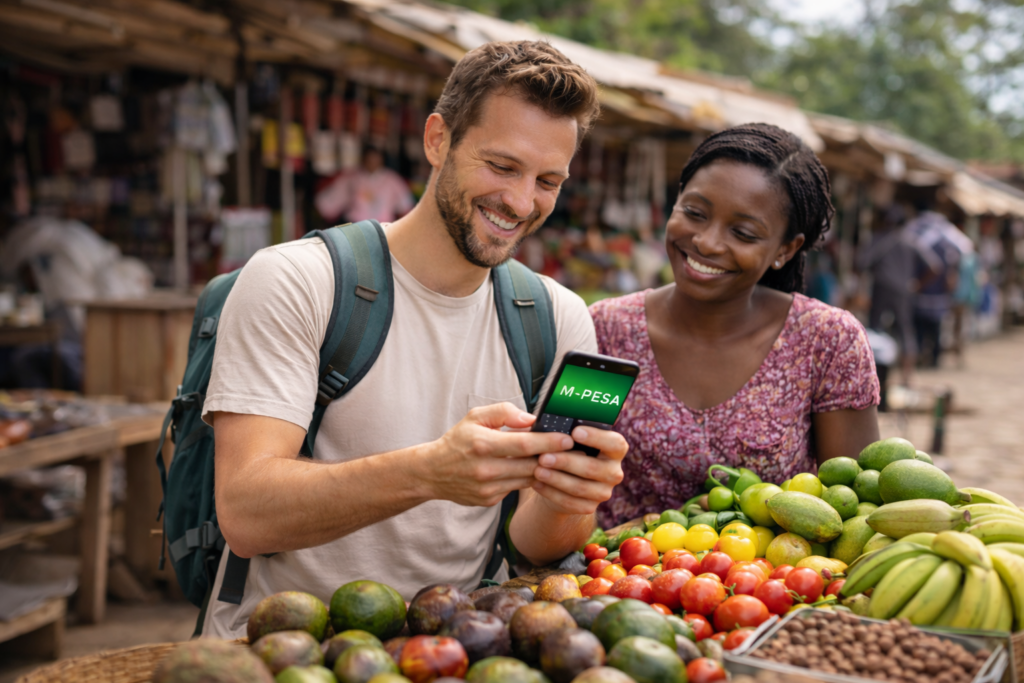
Kenya is world-famous for mobile money. Over 90% of adults use it. The most popular is M-Pesa.Others include Airtel Money and T-Kash.
How to Register for M-Pesa as a Foreigner
- Visit any Safaricom shop
- Present your passport and valid visa/permit
- Register for a Safaricom SIM card (required for M-Pesa)
- Activate M-Pesa at the counter
Once activated, you can:
- Deposit cash at M-Pesa agents (visible everywhere)
- Send and receive money instantly
- Pay for goods and services in most shops, restaurants, and taxis
- Withdraw cash at agents or ATMs
- Link M-Pesa to your bank account for direct transfers
Limits and Costs
- Daily transaction and withdrawal limits apply (check current rates at the Safaricom site)
- Sending/withdrawing incurs small fees. Receiving money is free.
- Keep your PIN secure
Other Wallets
- Airtel Money: Popular in some regions, similar registration process
- T-Kash: Offered by Telkom Kenya
- International options like Wise and PayPal are also available but work best when linked to Kenyan bank accounts or cards
Why Use Mobile Money?
- Fast, reliable, widely accepted
- No need to carry large sums of cash
- Useful for paying utilities, shopping, and even transport (boda bodas, matatus)
Card vs Cash: Where and How to Pay
- Visa and Mastercard are accepted at most hotels, supermarkets, petrol stations, and larger restaurants
- Some outlets accept American Express, but coverage is limited
- Always inform your home bank before traveling to Kenya to avoid card blocks
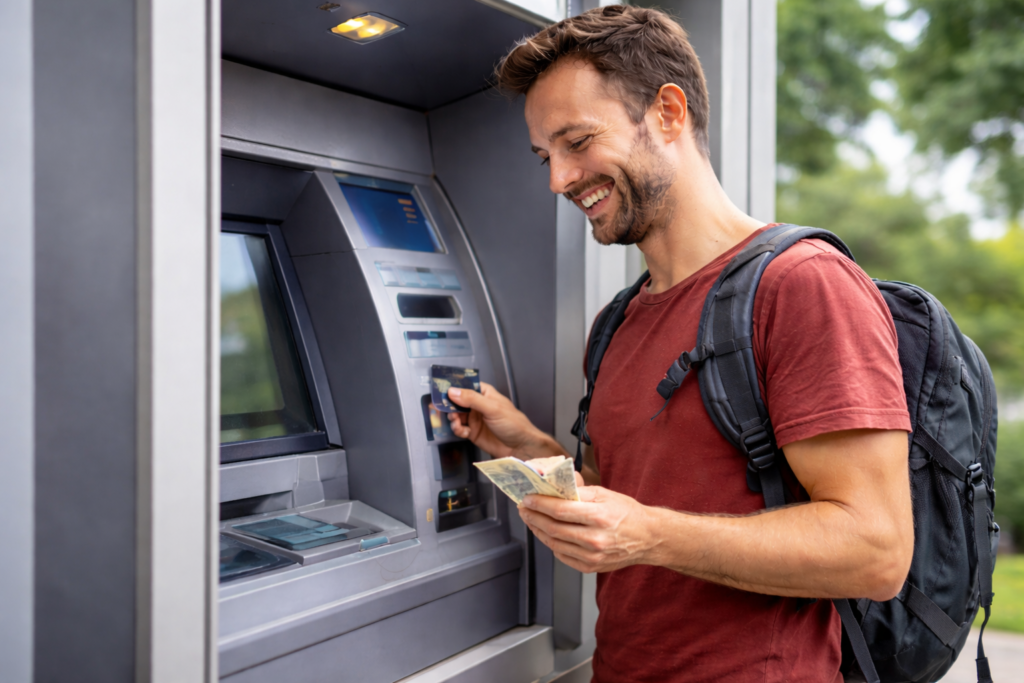
- ATM withdrawals are easy, but check for international withdrawal fees
- Some banks limit foreign cards to certain machines or impose daily caps
Cash
- Kenyan Shillings (KES) are needed for most day-to-day transactions, especially in markets, small shops, matatus (shared taxis), and remote areas
- Withdraw cash only at official ATMs and during daylight for safety
- Carry smaller denominations for convenience
Where Cards Don’t Work
- Most street vendors, local markets, and public transport accept cash or mobile money only
- Some rural ATMs run out of cash or don’t accept foreign cards
Card vs Cash Summary Table
| Payment Type | Where Used | Key Tip |
| Debit/Credit Card | Hotels, malls, big shops | Always carry backup cash |
| Cash | Markets, taxis, rural areas | Withdraw during daylight |
| Mobile Money (M-Pesa) | Nearly everywhere | Top up at agents as needed |
Currency Exchange and Safety Tips
Currency Exchange
- Only use licensed bureaus or official banks for currency exchange
- Avoid changing money on the street
- Keep exchange receipts for large transactions
Safety When Handling Money
- Do not carry large amounts of cash
- Use a discreet money belt or inner pocket
- Be cautious when using ATMs, especially at night
- Shield your PIN and watch for card skimmers
- Use hotel safes for valuables and passports
How to Get the Best Rates
- ATMs often offer competitive rates, but always confirm your bank’s fees
- Banks and bureaus in city centers give better rates than airports or hotels
Digital Security
- Use strong PINs and passwords for banking and mobile wallets
- Do not share account or wallet details
- Report lost cards or phones immediately to your bank or mobile provider
Cultural Insights for Money Matters
- Greet cashiers and staff with “Jambo” (hello) or “Habari” (how are you?)
- Tipping is welcomed but not mandatory; round up bills at restaurants or leave small change for good service
- Avoid displaying large sums of money in public
- Learn basic Swahili phrases for transactions, such as “Pesa ngapi?” (How much?)
Common Mistakes and Scams to Avoid
- Never exchange money with strangers or street touts
- Do not share your PIN or banking details, even with people claiming to be bank staff
- Be wary of fake M-Pesa messages or calls asking for money
- Only use official agents and shops for mobile money
FAQ: Managing Money in Kenya as a Foreigner
- Can I open a bank account in Kenya as a tourist?
Most banks require a valid work or residence permit, not a tourist visa. - Is M-Pesa available to foreigners?
Yes. With a valid passport and Kenyan SIM card, you can register. - Do I need to carry cash everywhere?
Carry some, but use mobile money or cards when possible. - Are foreign cards widely accepted?
Yes in cities, rarely in rural areas. - How do I get a KRA PIN as a foreigner?
Apply online at the KRA portal or seek help at a bank. - Can I send money abroad from Kenya?
Yes, but check your bank or M-Pesa for supported corridors. - What are the ATM withdrawal limits?
Limits vary by bank, but expect KES 40,000–60,000 per transaction. - Is currency exchange safe at the airport?
Rates are usually lower, but security is good. - Are there scams involving M-Pesa?
Beware of fake messages and unofficial agents. - Myth-buster: “You cannot use mobile money without a Kenyan ID.”
False. Passports are accepted for M-Pesa registration.