Why the TouristTap App Could Change Travel Payments for Tourists and Local Businesses
What Is the TouristTap App?
The TouristTap app is a travel payment solution designed to help visitors make cashless payments more easily while traveling in Kenya. Recent coverage and company materials describe it as an app that lets tourists pay local merchants using card-based, contactless technology instead of relying on cash, ATMs, or traditional card machines. Craft Silicon presents TouristTap as a way for travelers to “pay like locals,” while media reports explain that it is built to connect international cards with local payment rails and merchants across the tourism ecosystem.

At its core, the TouristTap app addresses a familiar pain point in many travel destinations: tourists often arrive ready to spend, but payment options on the ground can be inconsistent. Some merchants accept mobile money only, some prefer till numbers or paybills, and others may not have card terminals at all. TouristTap aims to close that gap by allowing smoother transactions between international visitors and local businesses.
Why Payment Friction Is a Big Problem for Travelers
Travel should feel exciting, not stressful. Yet one of the quickest ways a trip can become frustrating is when paying for simple things becomes difficult. Tourists may need local currency immediately after landing, but ATMs can be inconvenient, scarce in some areas, or unfamiliar to first-time visitors. Small shops, curio sellers, tour operators, and independent service providers may also lack conventional card infrastructure, even when they serve international guests regularly.
This is where the TouristTap app becomes relevant. Instead of forcing travelers to juggle cash, exchange rates, and limited acceptance points, the app is positioned as a bridge between global payment behavior and local commerce. That matters because convenience strongly shapes the visitor experience. When tourists can pay easily, they are more likely to spend confidently, support more local businesses, and enjoy the journey without unnecessary interruptions. This is also especially important in a tourism economy as large as Kenya’s, which recent reporting says generated about KES 500 billion in 2025.
Who Built the TouristTap App?
The TouristTap app was launched by Craft Silicon, a Kenyan fintech company. Multiple reports identify Craft Silicon as the company behind the platform, while the App Store listing names Little Limited as the developer. These are connected brands within the wider Craft Silicon ecosystem.
That matters for trust. Travelers and merchants alike want to know whether a payment platform is backed by a serious technology company with real infrastructure, security standards, and support systems. In TouristTap’s case, public reporting links the app to established players and payment partnerships that include KCB and Visa infrastructure.
How the TouristTap App Works
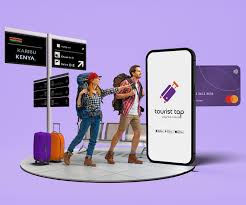
The exact user flow may vary by device, but the broad model is clear from current sources. The TouristTap app enables tourists to use contactless payment methods through NFC-enabled devices. On Android, tap-to-pay functionality works natively through NFC, while on Apple devices the payment flow is routed through Apple Pay because of Apple’s tighter control over NFC access.
For the tourist
A traveler downloads the TouristTap app, signs up, and uses a compatible smartphone to initiate payments. Public descriptions indicate that the experience is meant to be quick and simple, with minimal registration friction and a focus on seamless use while on the move.
For the merchant
The merchant does not necessarily need a traditional point-of-sale terminal. Reports describe TouristTap as turning an NFC-enabled smartphone into a point-of-sale experience, making it easier for merchants who previously depended on cash or mobile money only.
During the transaction
The tourist taps or authorizes the payment, then the funds are routed to local payment endpoints such as till numbers, paybills, mobile wallets, or bank accounts, depending on the merchant setup. That is one of the most practical aspects of the TouristTap app: it is built for the realities of local commerce rather than forcing local businesses to adopt expensive new hardware first.
Key Features of the TouristTap App
1. Cashless convenience
One of the strongest selling points of the TouristTap app is that it reduces the need to carry cash. The App Store description explicitly encourages users to “ditch the cash,” while the official landing language centers on hassle-free travel payments.
2. Local payment compatibility
TouristTap stands out because it appears designed not just for card acceptance in formal venues, but also for local merchant ecosystems that rely on till numbers, paybills, wallets, and bank transfers. That makes the TouristTap app more useful in real-world tourism settings, from urban restaurants to smaller traders and attractions.
3. NFC and contactless technology
The app is built around NFC-powered payments, which support faster and more familiar payment behavior for many international travelers. That helps reduce awkward checkout moments and keeps transactions moving smoothly.
4. Apple Pay pathway on iPhone
For iPhone users, TouristTap uses Apple Pay in place of direct native NFC tap behavior. That is an important compatibility detail because it shows the TouristTap app is trying to support both major smartphone ecosystems rather than focusing only on Android users.
5. Transparent fees
Current reporting says transaction costs are displayed clearly within the app before payment confirmation and that there are no hidden fees. That kind of transparency can make a major difference for tourists already navigating exchange rates and unfamiliar pricing environments.
Is the TouristTap App Secure?
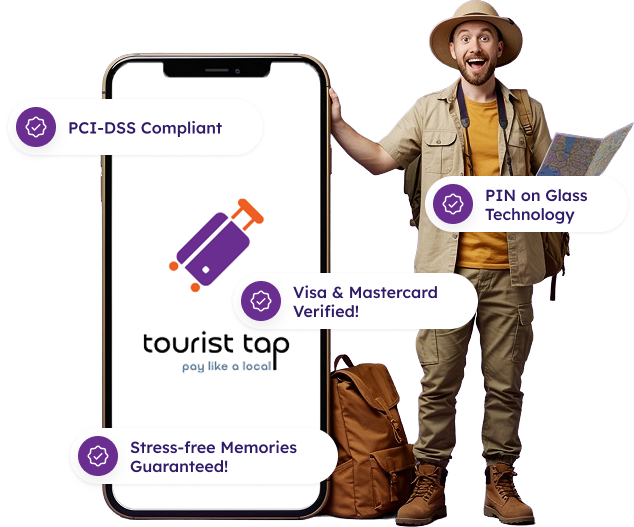
Security is one of the first questions any traveler will ask about a payments product, and rightly so. According to Craft Silicon’s official product description and independent reporting, the TouristTap app is built on PCI-DSS certified technology. Sources also state that card details are encrypted, never stored on the device, and protected using PIN-on-Glass authorization.
That combination is important for three reasons.
Industry-grade compliance
PCI-DSS is a recognized global standard for payment card security. When a platform emphasizes PCI-DSS certification, it signals that the product is not treating payment protection casually.
Reduced exposure of card data
Reports say card information is encrypted and not stored. For users, that lowers concern about the app keeping sensitive payment details in insecure ways.
Trusted processing ecosystem
Tech coverage says KCB processes and settles the payments, while Visa provides card network rails through CyberSource. That gives the TouristTap app added credibility because it is not presented as a standalone experimental wallet without established payment infrastructure behind it.
Why the TouristTap App Matters for Kenya’s Tourism Sector

Tourism is not just about flights, hotels, and safaris. It is also about all the smaller transactions that shape a visitor’s impression of a destination: paying for a curio, tipping for a service, buying snacks on the road, settling an entry fee, or making a quick restaurant payment. When those moments are difficult, the destination can feel less accessible. When they are smooth, the country feels more welcoming and modern.
The TouristTap app matters because it tries to solve that exact problem at scale. Tech-ish reported that TouristTap has now been authorized as a payment option across Kenya’s parks, hotels, and attractions, which suggests the platform is moving beyond launch buzz into wider ecosystem adoption.
That could have ripple effects across the tourism value chain. Larger businesses benefit from better customer convenience. Smaller merchants benefit from access to international spend. And travelers benefit from having fewer payment surprises during their trip. In that sense, the TouristTap app is not just another fintech tool. It is part of a broader effort to make tourism spending easier, safer, and more inclusive.
Benefits of the TouristTap App for Tourists
Less cash to carry
Travelers can reduce dependence on physical cash, which improves convenience and may also improve safety.
Easier payments in more places
Because the TouristTap app is designed to work with local payment channels, tourists may be able to transact with merchants who otherwise would not accept their cards directly.
Better travel experience
When payment is simple, tourists spend more time enjoying the destination and less time solving logistics. That emotional benefit is easy to underestimate, but it matters. A smoother payment flow can make a destination feel far more traveler-friendly.
Benefits of the TouristTap App for Merchants
Access to international customers
Local merchants can potentially receive money from travelers who prefer card-based payments, even if the merchant traditionally relies on mobile money or bank channels.
Lower infrastructure barriers
If an NFC-enabled phone can act as the transaction device, merchants may not need a dedicated card machine to participate. That lowers the barrier to entry.
Referral incentives
Reporting also mentions a referral system where merchants who onboard tourists can earn commissions, giving businesses a reason to actively promote the TouristTap app to visitors.
Possible Limitations to Keep in Mind
No app is perfect, and an informative blog should say that plainly. The TouristTap app still depends on device compatibility, connectivity, merchant readiness, and user awareness. NFC-enabled phones are important for the experience described in public sources, and iPhone users depend on Apple Pay support rather than the same native path used on Android.
It is also fair to say that mass adoption takes time. Even a well-designed payment solution succeeds only when tourists understand it, merchants trust it, and partners keep the transaction experience reliable. So while TouristTap appears promising, its long-term impact will depend on how widely it is adopted across the travel ecosystem.
Who Should Use the TouristTap App?
The ideal user of the TouristTap app is an international traveler or visitor who wants a more seamless way to pay in Kenya. It may also appeal to diaspora users and locals with international cards, because current reporting says the platform is not limited strictly to tourists and can also be used for payments to till numbers, paybills, and wallets in Kenya.
On the business side, the app is particularly relevant for hotels, restaurants, guides, market traders, transport providers, attraction operators, and merchants serving tourists in places where traditional card acceptance is inconsistent.
Also read:Kenya Travel Money Tips: Currency, Cards, and Cash Safety
Wrap Up
The TouristTap app is an interesting example of travel tech solving a very practical problem. Instead of focusing only on flashy tourism features, it tackles one of the most important parts of the travel experience: paying easily and safely. Current public information shows that TouristTap is built for Kenya’s tourism and local commerce realities, combining NFC-based payments, local settlement options, security compliance, and support for both Android and Apple device ecosystems.
For travelers, the value proposition is simple: less cash, less hassle, and more freedom to enjoy the trip. For merchants, the platform offers a way to capture spending from customers who might otherwise struggle to pay. And for the tourism sector as a whole, the TouristTap app signals a push toward more modern, more inclusive payment experiences.
If adoption continues to grow, TouristTap could become more than a useful travel app. It could become part of how destinations make tourism feel frictionless from arrival to checkout.
FAQs
1. What is the TouristTap app?
The TouristTap app is a cashless travel payment app designed to help users pay local merchants more easily, especially in Kenya’s tourism ecosystem.
2. Who created the TouristTap app?
TouristTap is associated with Craft Silicon, while the App Store listing identifies Little Limited as the developer.
3. Is the TouristTap app available on iPhone?
Yes. The App Store listing shows Tourist Tap is available for iPhone and iPad.
4. Does the TouristTap app work on Android?
Yes. Public product pages describe TouristTap as NFC-powered on Android devices.
5. How does TouristTap help tourists?
It reduces reliance on cash, ATMs, and traditional card machines, making it easier for travelers to pay local merchants.
6. Is the TouristTap app secure?
Sources say it uses PCI-DSS certified technology, encryption, and PIN-on-Glass security.
7. Can TouristTap send money to local payment channels?
Yes. Reporting says it can route payments to till numbers, paybills, mobile wallets, and bank accounts.
8. Does TouristTap support Apple Pay?
Yes. On Apple devices, the payment flow runs through Apple Pay.
9. Is TouristTap only for tourists?
Not entirely. Recent reporting says the platform can also be used by people in Kenya and diaspora users with suitable cards.
10. Why is the TouristTap app important for Kenya?
It helps modernize tourism payments by making it easier for visitors to transact with a wider range of merchants across the country.