An Annual Coastal Festival Revitalising Mijikenda Identity
The Mijikenda Cultural Festival, popularly known as the Chenda Chenda Cultural Festival, is a vibrant annual event that gathers the nine sub-tribes of the Mijikenda people along Kenya’s coast to celebrate their rich heritage, reaffirm communal identity, and pay homage to the sacred kay a forests (makaya) that underpin their cultural and spiritual existence. With music, dance, traditional food, crafts, processions and inter-tribal reunion, the festival is not merely a carnival—it’s a living reaffirmation of identity in a world of change.
In this article, we explore the Mijikenda Cultural Festival in all its depth: its origins, meaning, rituals, traditions, present day expression, challenges, and why it remains essential for cultural survival. The focus keyword “Mijikenda Cultural Festival” will be used throughout to reinforce the theme, so you’ll see it referenced many times.
What Is the Mijikenda Cultural Festival?
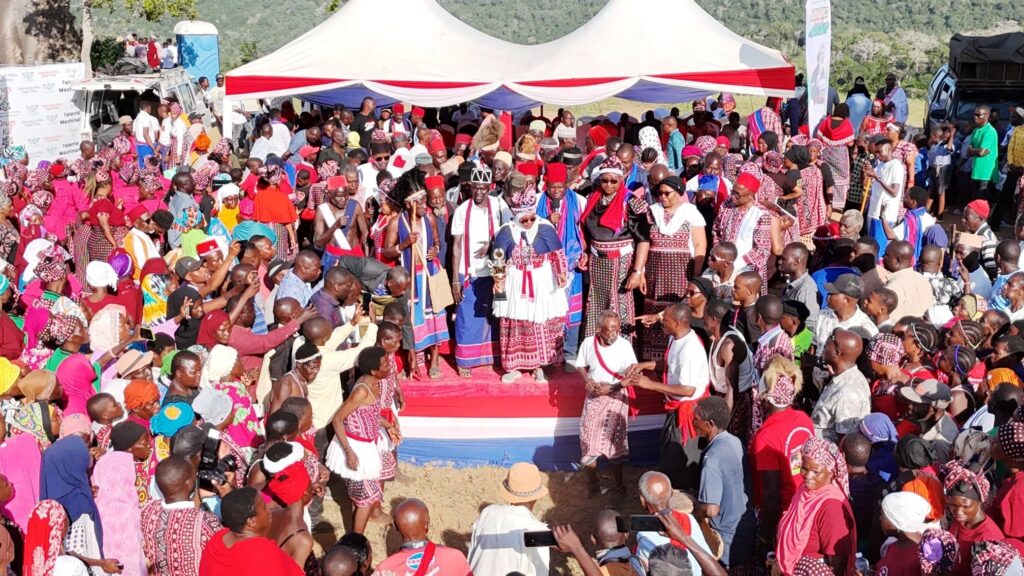
The Mijikenda Cultural Festival (Chenda Chenda) is an annual gathering of the nine Mijikenda sub-tribes—Giriama, Chonyi, Kauma, Kambe, Jibana, Ribe, Rabai, Duruma and Digo—who come together to celebrate their traditions, share cultural expressions and reflect on the challenges and opportunities facing their communities. The word “Chenda Chenda” (or “Kenda Kenda” in Kiswahili) literally means “nine nine” (chenda = nine in Mijikenda language) and symbolises the nine tribes uniting together.
At its heart, the Mijikenda Cultural Festival is more than performance: it is a platform for youth engagement, cultural transmission, dialogues of land and heritage, environmental conservation (especially of the sacred kaya forests), and community cohesion. Participants enjoy dances, songs, traditional food, craft fairs, and discussion forums. For many, it is a reaffirmation of identity.
The Origins & Significance of the Mijikenda Cultural Festival
The roots of the Mijikenda Cultural Festival lie in the ancient traditions of the Mijikenda peoples and their sacred settlement sites called kayas (plural makaya). A kaya is a fortified village planted deep inside coastal forests, inhabited by the Mijikenda since at least the 16th century. The kayas were spiritual, social and ritual centres: places of prayer, initiation, governance, burial, and ancestral communion.
By the 21st century, pressures of modernisation, land encroachment and youth migration posed risks to these traditions. The Mijikenda Cultural Festival was part of a cultural revival: a conscious effort to keep heritage alive, to bring youth back into tradition, to publicly display and celebrate Mijikenda identity, and to assert unity among the nine tribes. The festival also serves as a public platform for raising awareness of the kaya forests’ ecological value and the need for conservation of both culture and nature.
The significance of the festival thus lies in:
- Cultural transmission: connecting youth and elders.
- Unity and identity: emphasising “nine tribes, one Mijikenda”.
- Heritage conservation: both cultural (language, songs, dances) and ecological (kaya forests).
- Community development: raising issues such as land rights, unemployment, youth engagement.
Timing & Locations of the Mijikenda Cultural Festival
The Mijikenda Cultural Festival typically takes place annually on or around 9 September, a date chosen to emphasise the number nine (“chenda”) for the nine sub-tribes. The event is often hosted alternately in Kilifi County and Kwale County, two of the principal areas of Mijikenda residence. In 2025, for example, the festival was slated for Kaya Mtswakara in Kwale.
The location of the festival is more than a venue—it is a symbolic convergence of communities around their ancestral territories and sacred landscapes, often anchored by ceremonies linked to kayas, elders and cultural rites. The public festival grounds may be in an open field, but the spiritual centre of Mijikenda heritage continues to lie in the kayas themselves.
Cultural Highlights of the Mijikenda Cultural Festival
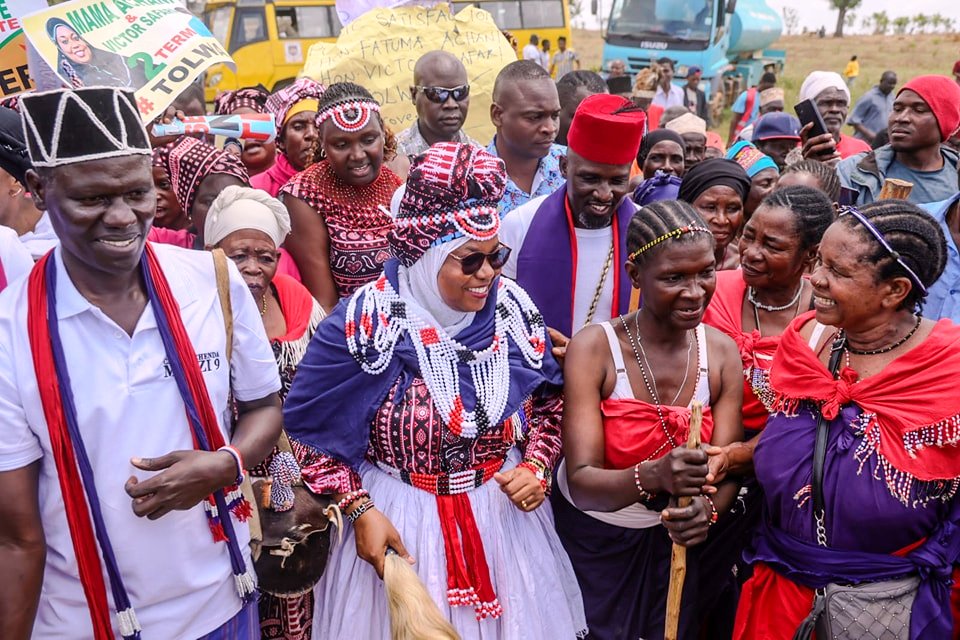
When one attends the Mijikenda Cultural Festival, one encounters a rich tapestry of tradition. The following are key highlights:
Traditional Music, Dance and Regalia
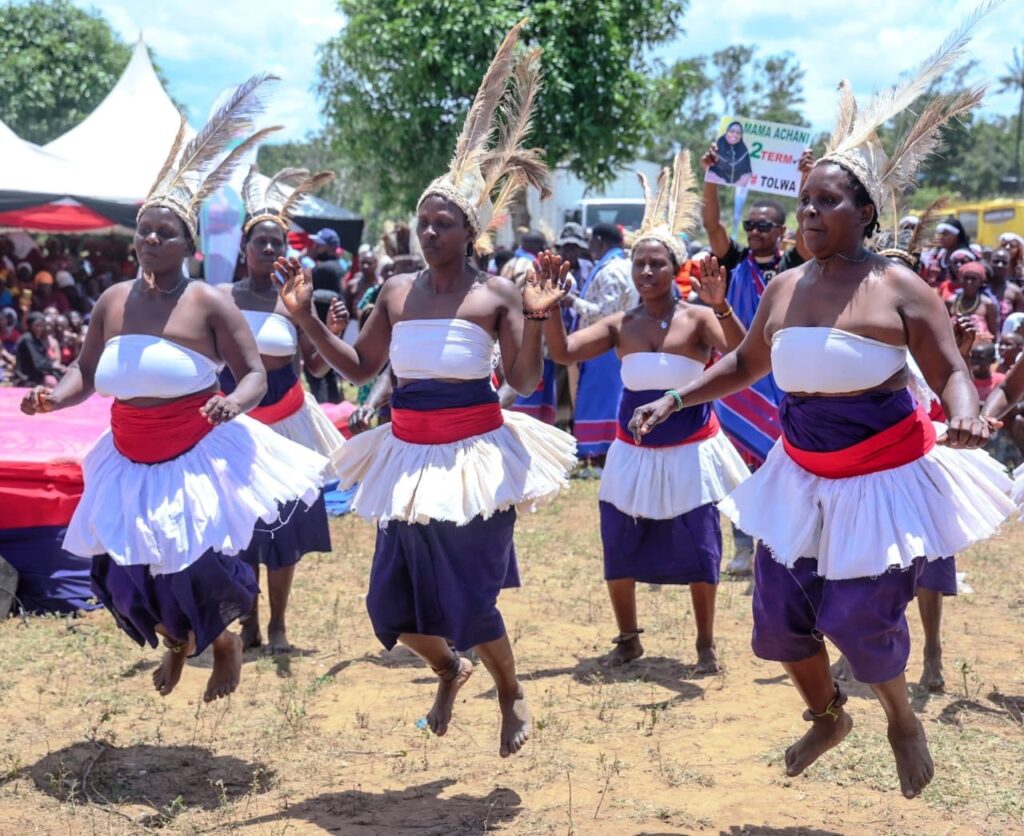
One of the most visible aspects of the festival is the vibrant display of traditional dances and songs: ululations, drum-beats, rhythmic movements, patterned costumes and beadwork. The youth participate in dance groups, guided by elders. At the Mijikenda Cultural Festival in 2024, themes such as “Our Culture is Our Pillar” emphasised the revival of youth interest through music and dance.
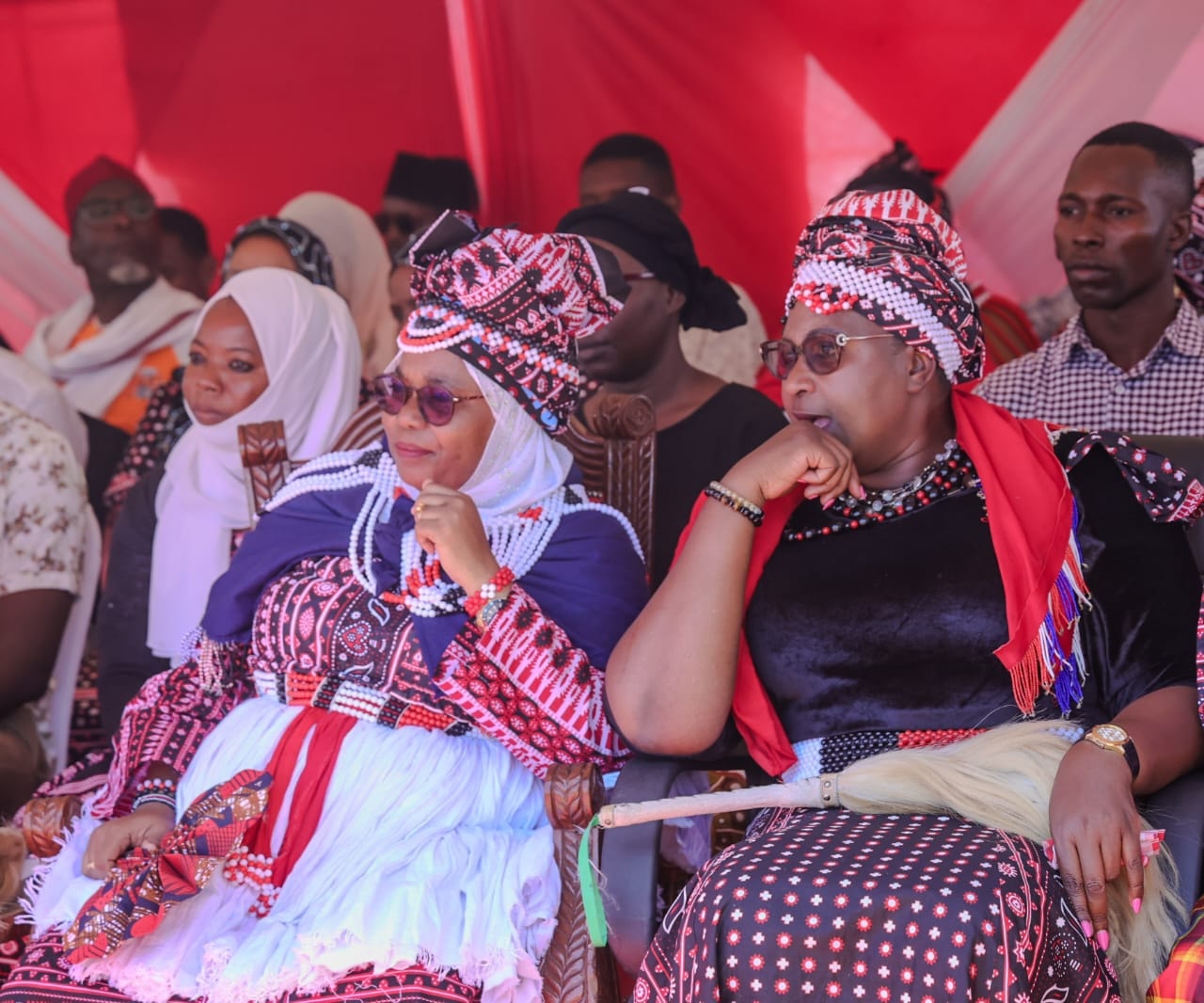
Attendees wear colourful regalia: traditional kikoi cloths, beads, shells, embroidered garments and head-attire. The flamboyance of the dress underscores the cultural pride of the Mijikenda and provides a visual spectacle during the festival.
Art, Crafts & Cultural Exhibitions
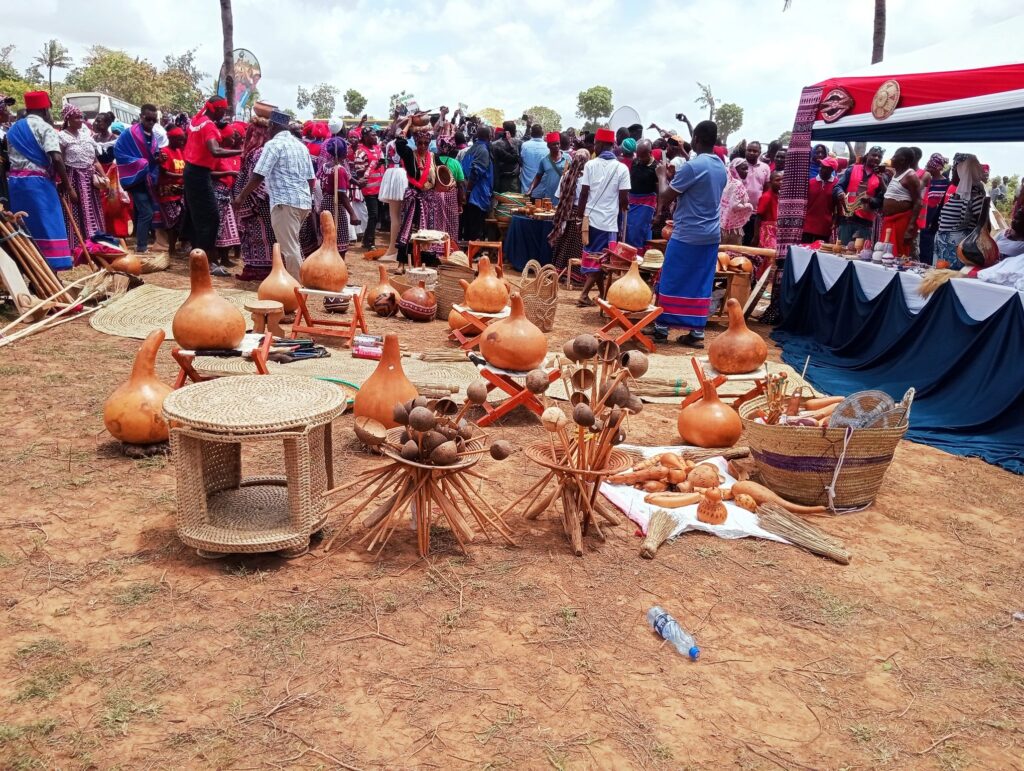
Another feature of the Mijikenda Cultural Festival is the showcase of arts and crafts. Visitors see bead-necklaces, traditional baskets, wooden artefacts, carved memorial statues (vigango) used by the Mijikenda to honour the dead. Exhibitions also display items linked to kaya rituals — protective talismans known as fingo.
These craft stalls not only provide cultural value but also economic opportunity for local artisans, bridging tradition and livelihood.
Food, Cuisine & Communal Feast
Traditional food plays a role in the Mijikenda Cultural Festival. Though less documented than the forests and dances, festivals often include communal feasting of local dishes, traditional cooking demonstrations, coconut-based meals (coastal staple) and sharing of heritage recipes. It is a time when culture is not only seen, but tasted.
Rituals, Heritage & the Kaya Connection
At the heart of Mijikenda identity lies the kaya forests — the sacred groves where council of elders conducted rituals, initiation, oath-taking and ancestral prayers. During the Mijikenda Cultural Festival, elders gather (often at their respective kayas) to perform prayers, plant indigenous trees, and reaffirm cultural authority. For example, in the 2024 festival, elders planted trees in the kaya forests as part of the ceremony.
This connection ensures that the festival is not just entertainment, but a reaffirmation of spiritual and ancestral ties.
Youth Involvement and Cultural Education
The Mijikenda Cultural Festival places a strong emphasis on youth participation—dance competitions, traditional knowledge workshops, language sessions, storytelling and cultural exhibitions designed to engage younger generations and familiarise them with their heritage.
Themes of Unity, Land, Environment & Development
Beyond heritage, the Mijikenda Cultural Festival is a platform for community discourse. Issues such as land disputes, youth unemployment, environmental degradation, unity among tribes are addressed. For instance, leading up to the festival, the call for unity among Mijikenda sub-tribes rose strongly as part of the message of the event.
Why the Mijikenda Cultural Festival Matters
The Mijikenda Cultural Festival matters for several interconnected reasons:
- It serves as a cultural anchor in a rapidly changing society—preserving language, song, dance, ritual and identity.
- It fosters inter-tribal unity at a time when fragmentation and marginalisation could weaken traditional community bonds.
- It raises environmental awareness, especially of the sacred kaya forests which are biodiversity hotspots and cultural landscapes.
- It provides economic and tourism opportunities—drawing visitors, giving artisans a platform, and positioning Mijikenda culture as part of Kenya’s coastal cultural tourism offering.
- It acts as a bridge between generations, enabling elders to transmit knowledge and youth to take pride in their roots, thus ensuring continuity.
In essence, the Mijikenda Cultural Festival is not just a celebration—it is a lifeline for cultural survival, community solidarity and sustainable identity.
Challenges Facing the Mijikenda Cultural Festival
Despite its importance, the Mijikenda Cultural Festival faces multiple challenges:
- Modernisation and youth migration lead to reduced traditional knowledge among younger generations.
- Land use changes and forest destruction threaten the integrity of the kaya forests.
- Funding and infrastructure for the festival may be limited, affecting quality and reach.
- Political interference: As noted in recent years, the festival has become increasingly politicised, which risks diluting its cultural purpose.
- Balancing tourism with authenticity: As visitors grow, there is a risk of commodifying culture, or losing ritual seriousness.
Addressing these challenges is essential to preserving the festival’s integrity and long-term impact.
The Future of the Mijikenda Cultural Festival
Looking ahead, the Mijikenda Cultural Festival has promising possibilities:
- Greater digital coverage and virtual outreach, enabling diaspora and wider audiences to engage.
- Expansion of cultural education programmes tied to the festival—schools, youth groups, cultural academies.
- Strengthened environmental partnerships, focusing on kaya forest restoration, tree-planting, biocultural conservation.
- Enhanced tourism packages, integrating visits to kaya forests, coastal villages, cultural homestays—thus linking the festival to broader cultural-eco tourism.
- Continued emphasis on unity and identity, ensuring the nine sub-tribes move forward collectively, preserving their culture in a united front.
If cultivated thoughtfully, the festival can become a model for coastal cultural revitalisation and community-led heritage development.
Also read:Turkana Cultural Festival: Tobong’u Lore, A Celebration of Unity and Tradition
Wrap-Up
The Mijikenda Cultural Festival (Chenda Chenda) is far more than a colourful event—it is an affirmation of identity, a bridge between past and future, and a space where culture, nature and community converge. From drum-beats and dances to kaya forest prayers and bead-work, the festival encapsulates the essence of the Mijikenda people of Kenya’s coast.
At a time when globalisation, land pressures and youth migration threaten indigenous heritage, the festival stands as a beacon of cultural resilience. For the Mijikenda, it is a homecoming—a renewal of heritage, a commitment to unity, and a public declaration that their culture lives on. For visitors, it offers a rare glimpse into one of Kenya’s oldest continuous cultural landscapes. May the celebration remain strong, relevant and rooted for generations to come.
10 Frequently Asked Questions (FAQs)
1. What is the Mijikenda Cultural Festival?
It is the annual cultural gathering of the nine sub-tribes of the Mijikenda community, known as the Chenda Chenda Festival, celebrating identity, culture, heritage and unity.
2. Who participates in the festival?
All nine Mijikenda sub-tribes—Giriama, Chonyi, Kauma, Kambe, Jibana, Ribe, Rabai, Duruma and Digo—alongside youth groups, artisans, cultural performers, visitors and allied communities.
3. When and where is the festival held?
It is typically held on or around 9 September (the “nine-nine” motif) and rotates between venues in Kilifi County and Kwale County on Kenya’s coast.
4. What are the main features of the festival?
Traditional music and dance, cultural costumes, food and craft exhibitions, rituals at the kaya forests, youth cultural programmes, community forums on land, environment and identity.
5. What are kayas and why are they important to the festival?
Kayas (makaya) are sacred forested villages of the Mijikenda people, spiritual and cultural centres. They are central to Mijikenda identity, and the festival maintains their relevance and conservation.
6. How does the festival promote cultural transmission?
By involving youth in dances, songs, crafts and rituals; by elders leading storytelling and heritage workshops; and by showcasing tradition in a lively public forum.
7. Does the festival have environmental or social themes?
Yes, it addresses issues like unity, land rights, youth unemployment and environmental conservation of the kaya forests. Tree-planting activities have been linked to the festival.
8. Can visitors attend the Mijikenda Cultural Festival?
Yes. The festival welcomes both Kenyans from other regions and international visitors keen to experience Mijikenda culture, provided they respect local customs and protocols.
9. What challenges face the festival and the culture it represents?
Modernisation, youth migration, loss of traditional knowledge, forest destruction, funding constraints, and risks of political interference or cultural commodification.
10. Why is the festival important for Kenya’s cultural landscape?
It preserves one of Kenya’s oldest living cultural traditions, strengthens community identity, promotes cultural tourism, and offers a powerful model of heritage-driven development and unity among diverse tribes.