Mount Longonot offers one of Kenya’s most accessible and rewarding hiking experiences. It is just 60 kilometers from Nairobi and makes for a perfect day trip. You’ll hike a dormant volcano, see wildlife, and enjoy breathtaking views of the Great Rift Valley.
This blog gives you all the practical information you need for a successful hike.
Also Read:The Sleeping Warrior Hike: Conquering Nature’s Silent Giant
A Detailed Explanation of the Mount Longonot Hiking Experience
Mount Longonot is a stratovolcano located in the Great Rift Valley. It stands at 2,776 meters above sea level. The crater is about 8 kilometers around, making it ideal for intermediate-level hikers looking for a half-day challenge.
Why Choose Mount Longonot?
- Short drive from Nairobi
- Moderate but rewarding hike
- Panoramic views of Naivasha and the Rift Valley
- High chances of spotting zebras, giraffes, and buffalo
- Safe and well-marked trail
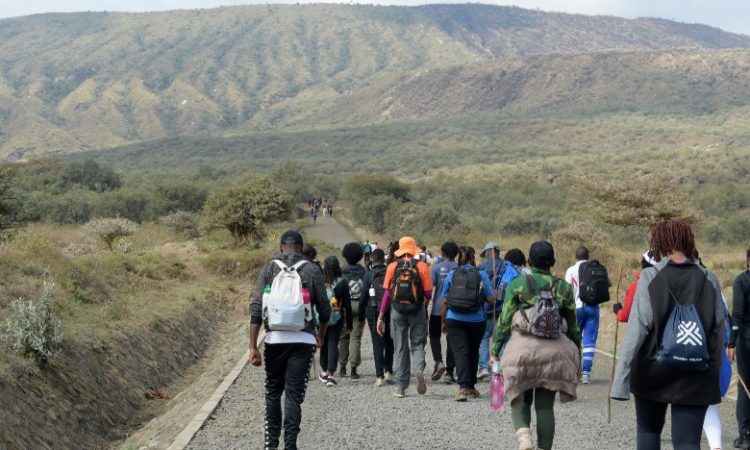
How to Get There
You can reach Mount Longonot in 1.5 to 2 hours from Nairobi by car. Take the Nairobi-Nakuru Highway and turn off at Mai Mahiu or Naivasha, depending on traffic.
You’ll need to check in at the Mount Longonot National Park gate.
Park Entry Fees (Residents):
- Adults: KES 300
- Children: KES 215
Park Entry Fees (Non-Residents):
- Adults: USD 26
- Children: USD 17
Fees are paid via M-Pesa or card, not cash.
Best Time to Go
- Dry season (June to October, January to February) offers better visibility and easier trail conditions.
- Avoid rainy season as trails get slippery.
Start your hike early—between 7:00 am and 9:00 am. It gets hot and crowded after 11:00 am.
What to Bring
Pack light but smart. Essentials include:
- Water (at least 2 liters)
- Snacks or a packed lunch
- Sunscreen and a hat
- Comfortable hiking shoes
- Light jacket (mornings can be chilly)
- ID or passport for park entry
- Camera or phone for photos
Optional but useful:
- Hiking poles
- Binoculars for wildlife spotting
- Small first-aid kit
The Hike Itself
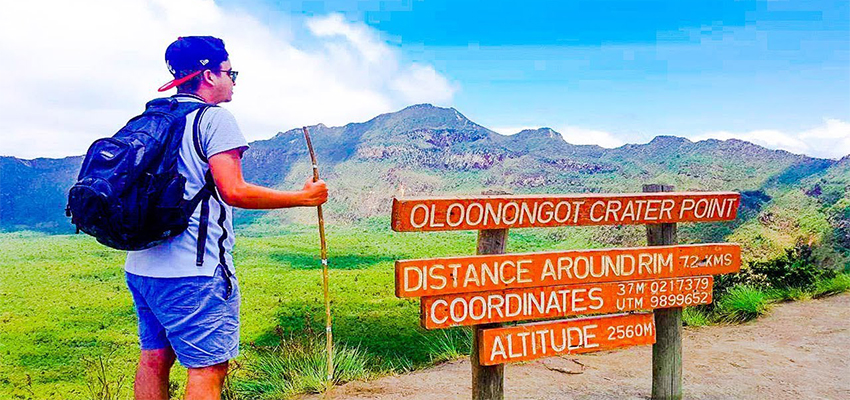
The main trail starts at the gate and goes to the crater rim. From there, you can choose to walk around the entire crater or return the same way.
- Gate to Crater Rim: 3.1 km one way, takes about 1–1.5 hours. Steep and dusty.
- Crater Rim Loop: 7.2 km, takes 2–3 hours depending on pace.
Expect sharp ascents and loose volcanic soil. The full loop is physically demanding but doable for most active hikers.
Fitness Level
You don’t need to be an athlete, but a decent fitness level helps. The hike is a moderate-to-strenuous activity. The rim walk has steep sections and uneven terrain.
If you’re new to hiking, do the ascent only and skip the full loop.
Safety Tips
- Hike with at least one partner
- Stick to marked trails
- Start early and finish before 4:00 pm
- Watch your footing on loose gravel
- Bring enough water
- Inform someone if you’re hiking alone
There are rangers at the gate and often on the trail. Signal can be weak, so don’t rely on mobile data.
Wildlife You Might See
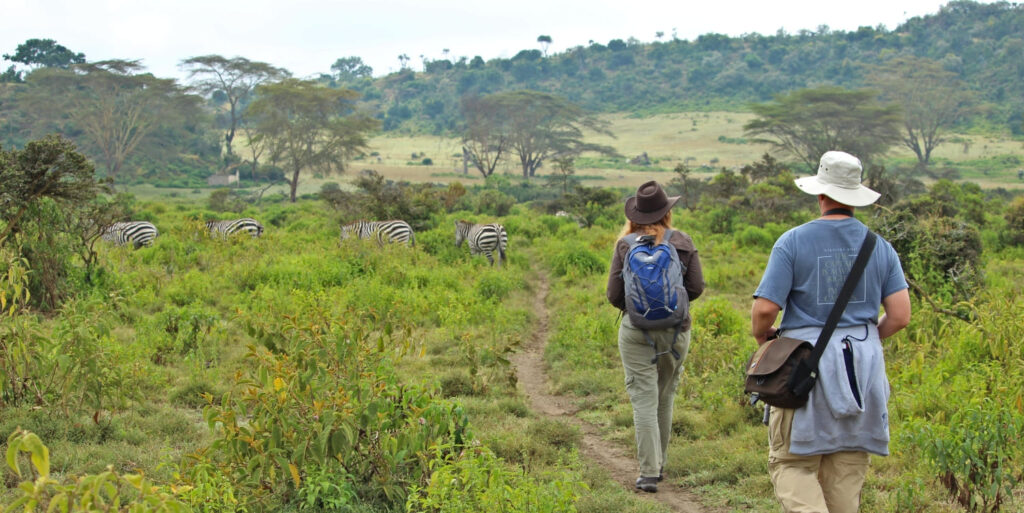
Mount Longonot is part of a national park. Animals often spotted include:
- Zebras
- Giraffes
- Baboons
- Buffalo
- Gazelles
Always keep a safe distance. No feeding or approaching animals.
Photography Highlights
Bring a good phone or camera. Key photo spots include:
- View from the summit across the crater
- Lake Naivasha in the distance
- Wildlife along the trail
- Sunrise if you start early
Use a lens cloth. Dust is everywhere.
Food and Facilities
There are no restaurants or cafes at the gate. Bring all food and drinks with you. There are restrooms at the entrance but not on the trail.
Eat before or after the hike in Naivasha or along the highway.
Guided Tours vs. Self-Guided
You don’t need a guide, but it can add value.
Benefits of a guide:
- Local knowledge
- Help with pacing
- Assistance if injured or tired
Guides are available at the gate or through tour companies.
Expect to pay around KES 2,000–3,000 for a guide.
Nearby Attractions
Make the most of your trip by exploring nearby spots:
- Lake Naivasha for boat rides
- Hell’s Gate National Park for cycling and geothermal sites
- Crescent Island Game Sanctuary for walking safaris
These can turn your hike into a full-day adventure.
Sample Itinerary
6:30 AM – Depart Nairobi
8:00 AM – Arrive at Mount Longonot Gate
8:30 AM – Start hike
11:30 AM – Complete crater loop
12:00 PM – Picnic lunch at base
1:00 PM – Depart for Lake Naivasha or drive back
3:30 PM – Arrive Nairobi (depending on traffic)
Who Should Go
Ideal for:
- Tourists with limited time
- Locals seeking a fitness day
- Families with older children
- Corporate team-building groups
Not suitable for:
- Toddlers
- People with heart or joint problems
- Anyone without adequate hydration or footwear
Environmental Responsibility
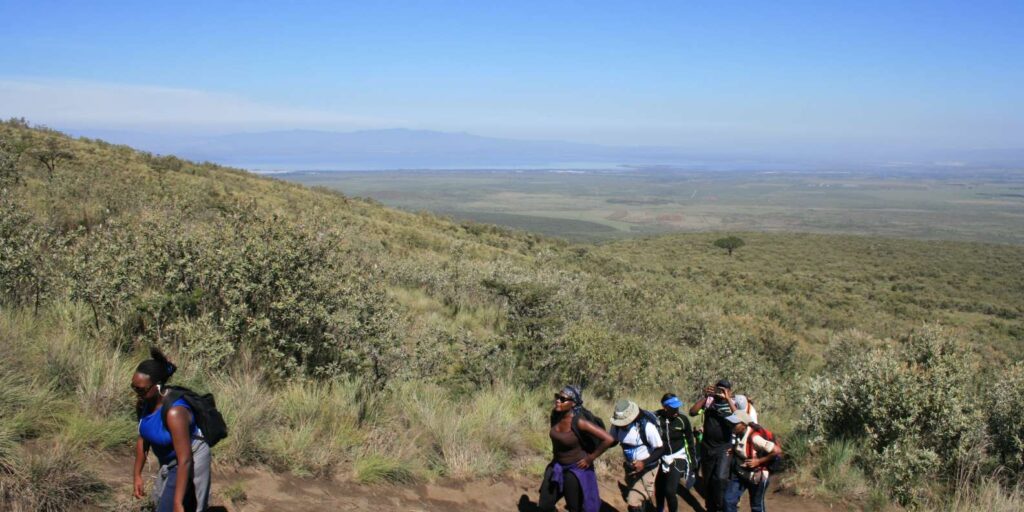
Help preserve the trail and ecosystem.
- Carry your trash out
- Stay on the trail
- Do not pick plants
- Do not disturb animals
Final Tips
- Avoid weekends if you want quiet trails
- Wear layers
- Confirm park hours before your trip
- Check your car’s fuel and tires—last stretch is rough
FAQs
1. Is Mount Longonot safe to hike alone?
It’s safer to hike in a group. Solo hiking is possible but not recommended.
2. Do I need hiking boots?
No, but sturdy running or trekking shoes are necessary.
3. Can kids do the hike?
Yes, kids above 10 years can usually manage with breaks.
4. Are there toilets on the trail?
No. Toilets are only available at the entrance.
5. Can I camp at Mount Longonot?
No, it’s a day-use park. No overnight camping allowed.
6. Are drones allowed?
No. Drones are prohibited in all Kenyan national parks without a special permit.
7. Do I need to book in advance?
Not for individual visits. Large groups should call ahead.
8. What’s the weather like?
Cool in the morning, hot by noon. Carry layers.
9. Is the rim walk mandatory?
No. You can hike up and return without circling the rim.
10. Are there any guided tours from Nairobi?
Yes. Many tour companies offer full-day packages with transport and guide included.