A Spectacular Wonder in the Highlands
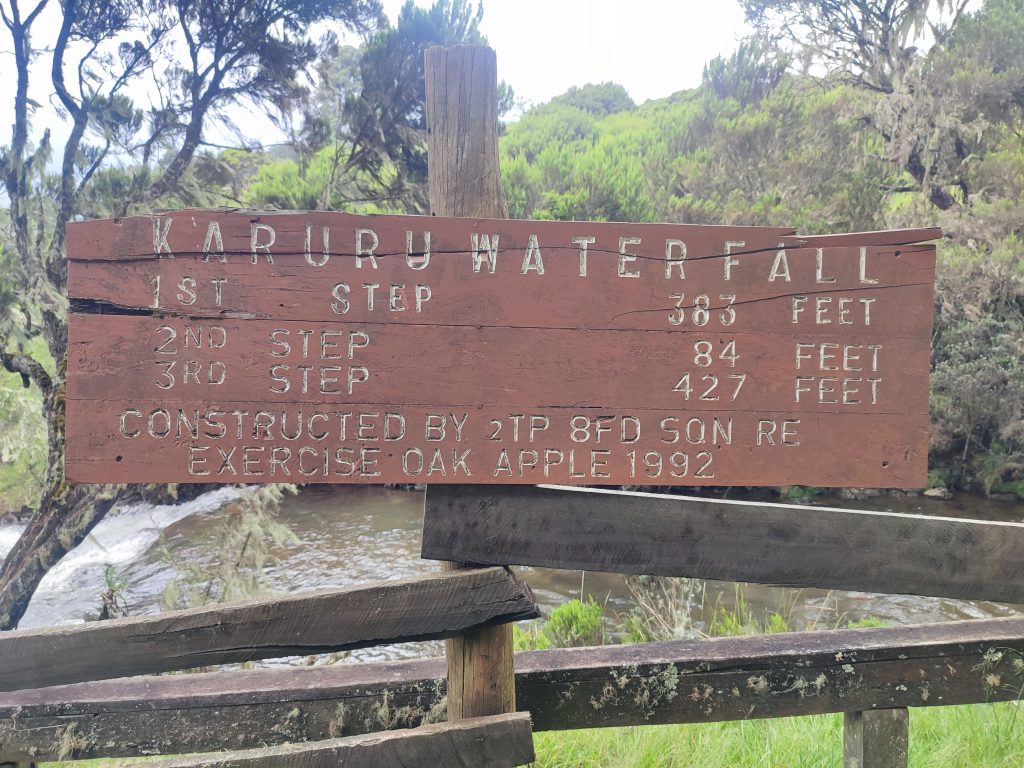
Karuru Falls is one of Kenya’s most breathtaking natural landmarks, cascading dramatically within the Aberdare National Park. Famous for being the tallest waterfall in Kenya, Karuru Falls plunges in three spectacular tiers into a deep gorge, surrounded by dense forests, moorlands, and wildlife.
At a combined height of 273 meters, this waterfall is not just a sight to behold but also a journey into the heart of the Aberdares, where rugged landscapes meet misty forests and alpine moorlands. For adventurers, photographers, and nature lovers, a visit to Karuru Falls is an unforgettable experience.
Location and Geography of Karuru Falls

Where Karuru Falls is Found
Karuru Falls lies deep within the Aberdare National Park, a UNESCO-protected ecosystem in Nyandarua County, central Kenya. The falls are about 160 km north of Nairobi, making them accessible for both day trips and multi-day safaris. Visitors typically enter the park through the Matubio Gate, one of the most convenient entry points, and continue with a scenic drive through montane forests and rolling moorlands before reaching the designated viewpoint for the falls.
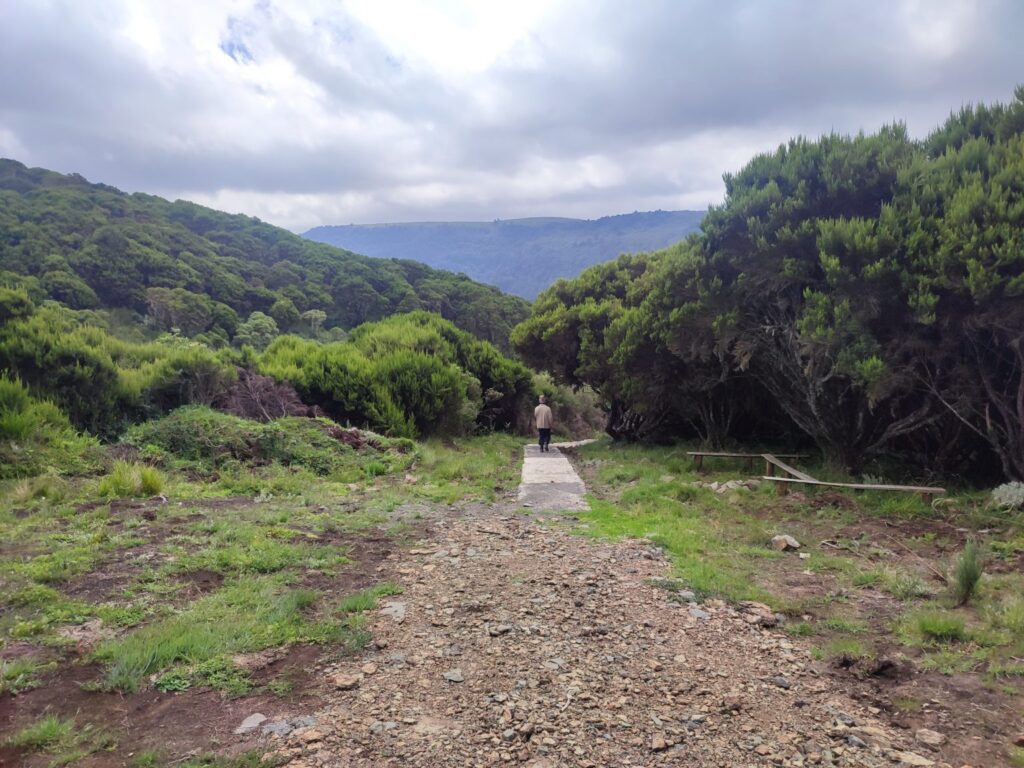
The drive itself is part of the adventure—roads wind through dense bamboo thickets, misty valleys, and open moorlands, giving glimpses of wildlife before you even arrive at the waterfall. Because of its location inside a protected park, Karuru Falls remains pristine and untouched by human settlement, making it a true wilderness experience.
Natural Setting
The Aberdare Ranges form a dramatic backdrop to Karuru Falls, with elevations ranging from 2,000–4,000 meters above sea level. The waterfall is fed by glacial streams and rivers that rise in the moorlands, collecting rainfall and mist before plunging into the deep gorge.
One of the most striking features of the setting is the constant mist that rises from the gorge, creating an ethereal, almost mystical atmosphere. Visitors often find themselves surrounded by a cool spray even from the viewpoint. The surrounding forests are rich in wildlife—elephants browsing silently among the bamboo, buffaloes grazing in open clearings, colobus monkeys leaping across branches, and a vibrant variety of birds. This combination of raw power from the falls and the quiet presence of wildlife makes Karuru Falls both a scenic and ecological treasure.
The Magnificent Three-Tiered Waterfall
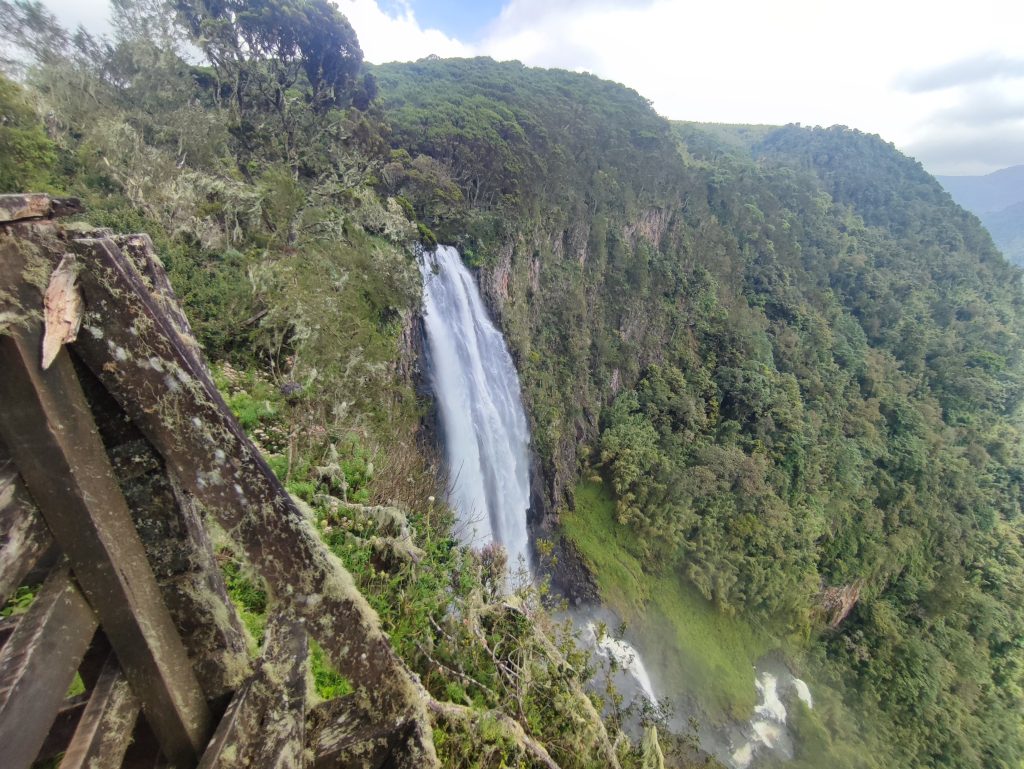
First Drop
The first tier of Karuru Falls plunges about 117 meters, making it one of the tallest single drops in Kenya. The thunderous roar of the water is audible long before reaching the viewpoint, and the cliffs are often shrouded in mist. In the early morning, the rising sun illuminates the spray, sometimes creating shimmering rainbows—a dream for photographers and nature lovers alike.
Second Drop
The second tier adds another 26 meters to the waterfall’s descent. While shorter, this section enhances the layered beauty of Karuru Falls, creating a rhythmic cascade that builds anticipation before the grand finale. Its gentler descent allows visitors to appreciate the contrast between the sheer force of the first plunge and the elegant continuation of water down the cliff.
Third Drop
The final drop, an impressive 130 meters, is the most dramatic. Here the water crashes into the forested valley below with overwhelming power, filling the gorge with spray and echoing thunder. When combined, the three tiers make Karuru Falls a breathtaking 273-meter cascade, making it not only Kenya’s tallest waterfall but also one of the most remarkable in East Africa.
The Viewing Experience
Karuru Falls Viewpoint
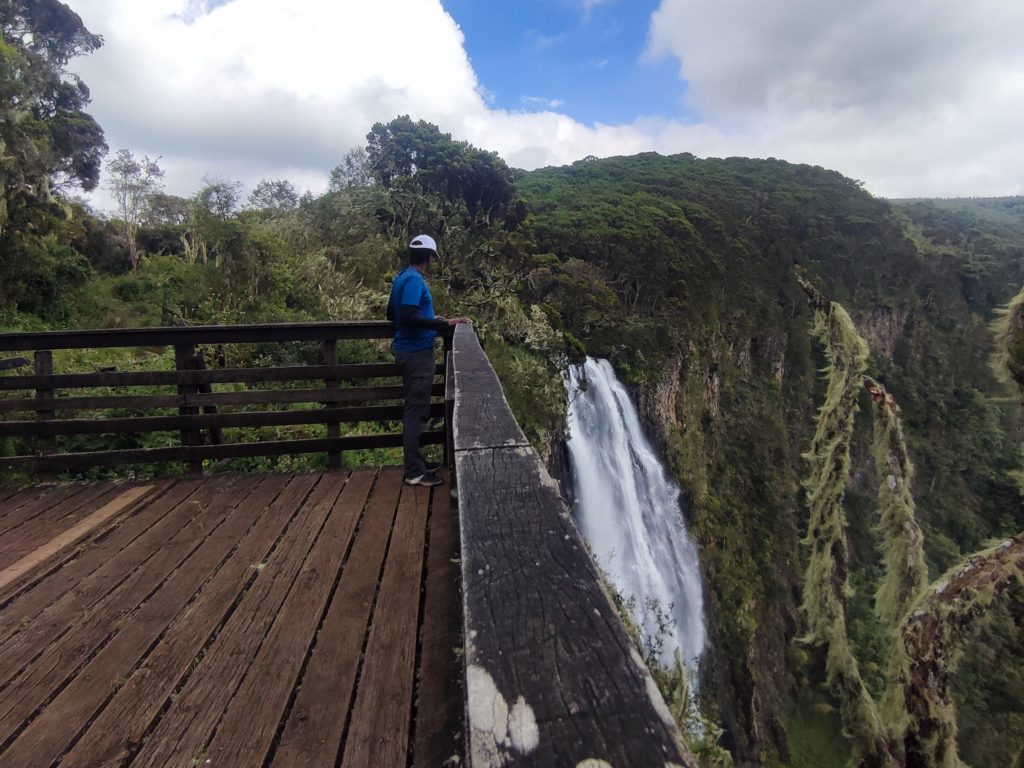
The Karuru Falls viewpoint was built by the Kenya Wildlife Service (KWS) to allow visitors to enjoy safe, panoramic views of the falls. Perched strategically at the edge of the gorge, it offers an unparalleled vantage point where the full height of the three-tier cascade can be seen on clear days. The sound of rushing water, the feel of cool mist, and the endless expanse of forest around the viewpoint combine to create a sensory feast.
The area around the viewpoint is also great for short walks, birdwatching, and simply soaking in the crisp mountain air. Because of its elevation, the climate is cool—so visitors should always come prepared with warm clothing.
Photography Opportunities
For photographers, Karuru Falls is a paradise. The lighting changes dramatically throughout the day:
- Morning: Mist rising with the sun, sometimes revealing rainbows.
- Midday: Clearer skies and sharper contrasts between the cliffs and the white torrents of water.
- Golden Hour: Warm hues cast across the gorge, creating atmospheric compositions.
Wildlife in the surrounding forest—elephants, monkeys, and birds—provide additional opportunities for stunning shots. Drone photography, where permitted, can also capture the sheer scale of the gorge and waterfall.
Hiking and Exploration Around Karuru Falls
Trails Leading to the Falls
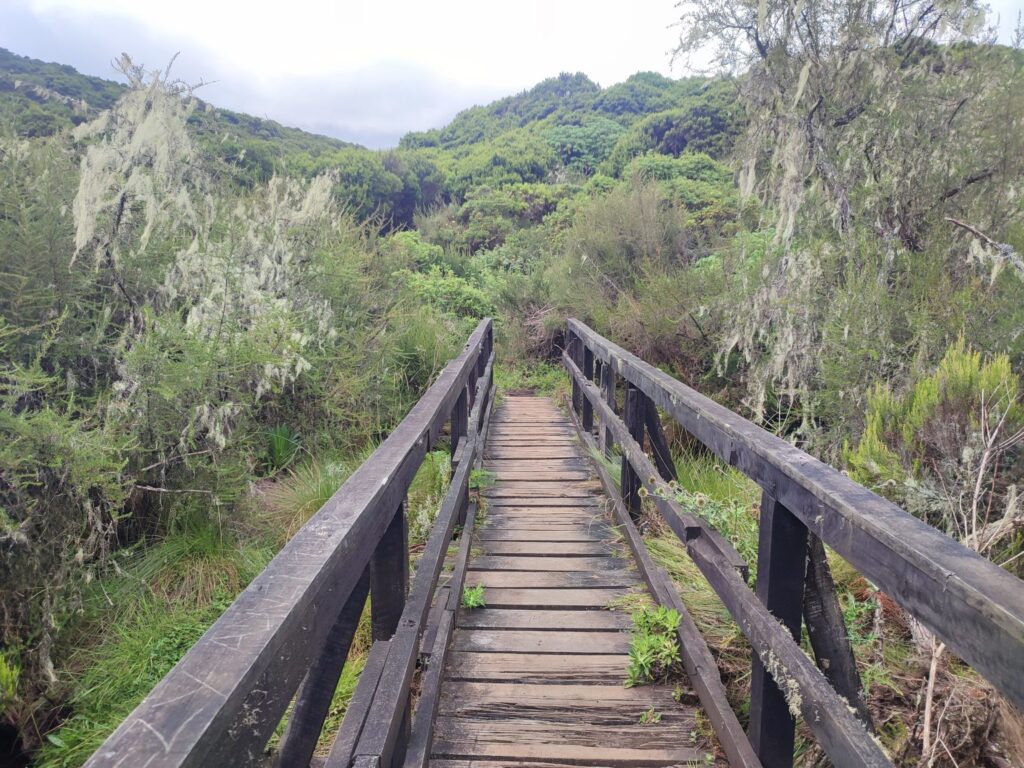
While many visitors are content to admire the waterfall from the viewpoint, adventurous hikers can explore trails within the Aberdares that pass near rivers feeding into Karuru Falls. These paths lead through bamboo forests, alpine moorlands, and ridges, offering glimpses of smaller cascades and streams before they converge into the main falls.
Guided hikes in the Aberdares often include Karuru Falls as part of a larger exploration of the park, combining wildlife viewing with the physical challenge of trekking in high-altitude terrain.
Wildlife Encounters
The Aberdare ecosystem around Karuru Falls is rich in biodiversity. Elephants are frequently seen in the area, their trails often visible on forest floors. Buffaloes and bushbucks graze in glades, while colobus and Sykes monkeys swing noisily overhead. Birdwatchers can spot Aberdare cisticolas, crowned eagles, sunbirds, and numerous forest-dwelling species.
Because large mammals like elephants and buffaloes are common, hikers are advised to move with guides and remain cautious. This mix of waterfalls, pristine forest, and abundant wildlife makes Karuru Falls a destination that captures the very essence of the Aberdares.
Travel Guide to Karuru Falls
Best Time to Visit
The dry seasons—January to March and June to October— are the most ideal times to visit Karuru Falls, as the trails and roads are more accessible. However, the rainy seasons (April–May and November–December) bring out the falls’ true power, with torrents of water and dramatic displays. The trade-off is that roads may be muddy and access more difficult. For photographers, the rainy season also offers more mist and atmosphere.
Getting There
From Nairobi, travelers drive north toward Nyahururu or Nyeri, then enter the Aberdare National Park through the Matubio Gate. Inside the park, KWS rangers or guides will direct visitors to the Karuru viewpoint. Because the Aberdare terrain is often muddy and steep, especially after rain, a 4×4 vehicle is highly recommended. Visitors should also budget time for the slow scenic drive through the forest before reaching the falls.
What to Carry
- Warm layered clothing – Weather is cold, misty, and unpredictable.
- Comfortable hiking shoes – Essential for walking trails and slippery ground.
- Camera with extra batteries and memory cards – To capture the falls at different times of day.
- Binoculars – For birdwatching and wildlife spotting.
- Snacks and drinking water – No shops or restaurants are located near the falls.
- Rain gear – Weather can change suddenly in the Aberdares.
Safety and Conservation
Safety Tips
- Always stay within designated viewing areas—gorge edges are steep and dangerous.
- Visit with guides or in groups for safety.
- Weather can change rapidly; carry rain gear.
- Be cautious of wildlife when driving or hiking around the Aberdares.
Conservation Efforts
Karuru Falls is part of the Aberdare National Park, which is under the protection of the Kenya Wildlife Service. Conservation efforts focus on preserving the forest ecosystem, maintaining wildlife corridors, and ensuring sustainable tourism. Visitor fees directly support these conservation programs.
Accommodation Near Karuru Falls
Budget Stays
Simple guesthouses and campsites are available in nearby towns like Nyahururu and Nyeri.
Mid-Range Options
Lodges and bandas operated by the Kenya Wildlife Service within the Aberdare National Park provide comfortable stays close to the falls.
Luxury Stays
For luxury seekers, Aberdare Country Club and The Ark Lodge provide high-end accommodation with unique game-viewing opportunities.
Why Visit Karuru Falls?
- Tallest Waterfall in Kenya – Its 273-meter height across three tiers makes it a record-holder.
- Scenic Beauty – Surrounded by misty gorges, montane forests, and alpine moorlands.
- Adventure & Photography – Perfect for hikers, photographers, and explorers.
- Wildlife Encounters – Located in the wildlife-rich Aberdare ecosystem.
- Accessibility – Easily reachable as part of an Aberdare National Park safari.
Also read:Kenya’s Top National Parks: Explore Wildlife & Natural Beauty
Wrap up
Karuru Falls is not just a waterfall—it is a symbol of the Aberdares’ rugged beauty and ecological richness. With its towering three-tier cascade, misty atmosphere, and breathtaking backdrop, it stands as Kenya’s most spectacular waterfall. Whether you’re a hiker, photographer, or nature lover, Karuru Falls promises an awe-inspiring experience that lingers long after your visit.
FAQs About Karuru Falls
1. Where is Karuru Falls located?
It’s in Aberdare National Park, Nyandarua County, central Kenya.
2. How tall is Karuru Falls?
It is 273 meters tall, spread across three dramatic tiers.
3. How do I access Karuru Falls?
Through Matubio Gate in Aberdare National Park, followed by a drive to the viewpoint.
4. What is the best time to visit Karuru Falls?
During the dry seasons (January–March, June–October), though rainy seasons make it more powerful.
5. Do I need a 4×4 to visit Karuru Falls?
Yes, especially in rainy seasons as roads in the Aberdares can be muddy.
6. Is hiking to Karuru Falls possible?
Yes, trails exist but most visitors enjoy the falls from the designated viewpoint.
7. What wildlife can be seen near the falls?
Elephants, buffaloes, monkeys, bushbucks, and various birds.
8. Is it safe to visit Karuru Falls?
Yes, if you stick to designated paths and visit with guides.
9. Are there accommodations nearby?
Yes, ranging from budget guesthouses to luxury lodges like The Ark and Aberdare Country Club.
10. Why is Karuru Falls famous?
Because it’s Kenya’s tallest waterfall and among the most scenic in East Africa.