Kituluni Hill looks ordinary until you put it to the test. Cars roll uphill. Water flows against gravity. It’s a strange place in Machakos County that seems to ignore the laws of physics. But is it magic, a miracle, or something else?
This blog explores the truth behind Kituluni Hill. You’ll learn what happens there, what people believe, and how science explains the mystery. If you’re planning a visit, this guide gives you everything you need.
Also Read:Six Kenyan Road Tripping Destinations To Tour In 2025
A Place Where Gravity Reverses?

Kituluni Hill sits just a few kilometers from Machakos Town. It’s part of the Eastern Highlands of Kenya. From a distance, it looks like any other hill. But visitors soon see something strange.
When a car is left in neutral on a stretch of road on Kituluni Hill, it rolls uphill. Water poured on the road flows upward. People feel like the laws of nature are broken here. Videos of these events have drawn global curiosity.
A Detailed Explanation of the Phenomenon
What’s happening at Kituluni Hill is not magic or a break in physics. It’s an optical illusion. The hill creates a false impression of slope. The surrounding landscape tricks your eyes.
Here’s how it works:
- Visual misalignment: Trees, poles, and horizons are slanted. This makes downhill look uphill.
- Perspective error: Without a clear view of the full slope, your brain guesses wrong.
- Gravity works normally: Despite what it looks like, gravity still pulls objects down. You’re seeing a slope that slopes down even though it appears to go up.
This type of location is called a “gravity hill” or “magnetic hill.” Similar places exist in India, the U.S., and South Africa. Kituluni’s unique landscape creates one of Africa’s most convincing illusions.
Local Beliefs and Myths
For locals, Kituluni Hill is more than science. It’s a place of wonder and mystery.
- Spiritual explanations: Some believe spirits protect the hill. They think invisible forces cause the movement.
- Supernatural stories: Legends say ancestors blessed the land. Others warn that the hill is sacred and should be respected.
- Magnetism myths: Some say magnetic forces are responsible, though no strong magnetic field exists there.
These beliefs coexist with scientific explanations. For many, the mystery makes Kituluni more special.
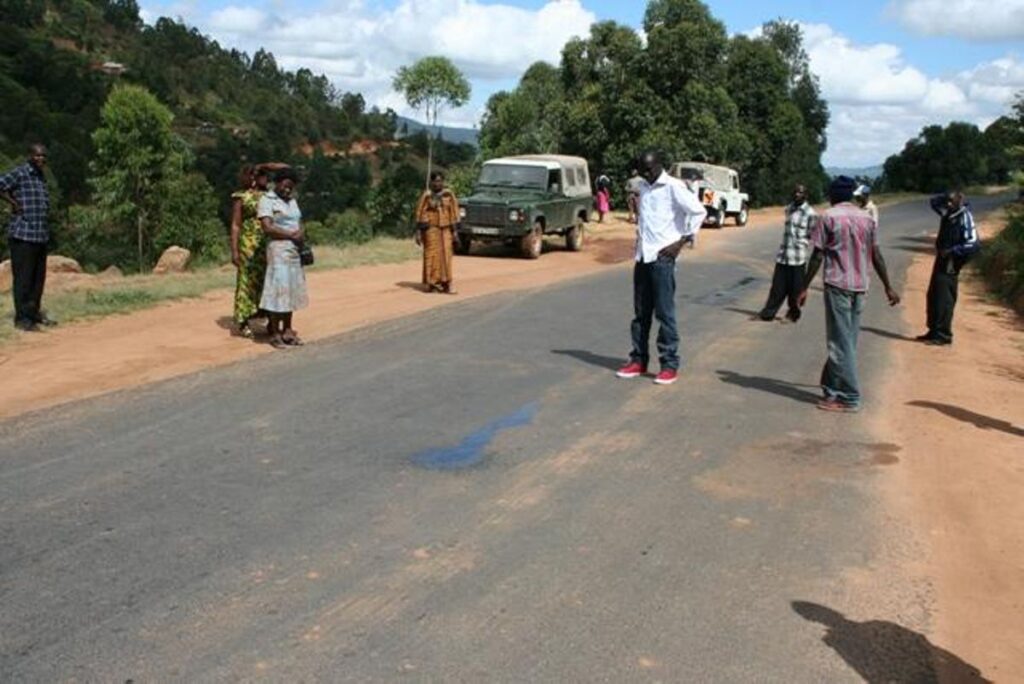
What Happens When You Visit
Visitors to Kituluni Hill often perform simple tests:
- Car test: Leave your vehicle in neutral and watch it move “uphill.”
- Water test: Pour water on the road and see it flow upward.
- Standing still: Some people say they feel a pull or shift when walking on the road.
You don’t need special equipment. Just your eyes and a phone camera.
The Best Time to Visit
Kituluni Hill is open year-round. For the best experience:
- Visit during dry seasons (January–March or July–October).
- Morning and late afternoon light helps reveal the illusion.
- Avoid rainy days. Wet roads make it harder to see water movements.
How to Get There
Kituluni Hill is about 12 kilometers from Machakos Town. Nairobi is 64 kilometers away.
- By car: Drive from Nairobi to Machakos via Mombasa Road (A109). Then take the Machakos-Kangundo Road.
- By public transport: Matatus and taxis from Machakos Town can take you to the site.
- GPS location: Search for “Kituluni Magnetic Hill” or ask locals once in Machakos.
There’s no official signage, so local guides help.
What to Bring
To make your visit smooth:
- A working vehicle
- A water bottle for the uphill test
- Camera or smartphone
- Comfortable walking shoes
- Sunscreen and hat for sunny days

Is It Safe?
Yes. Kituluni Hill is safe for all visitors. But always take normal precautions:
- Don’t leave valuables in your car
- Visit during daylight hours
- Use a guide if unsure about the location
Economic Impact
Kituluni Hill draws visitors from across Kenya and beyond. It helps the local economy:
- Local guides earn from tours
- Shops sell snacks, drinks, and souvenirs
- Taxis and matatus benefit from increased traffic
With better signage and infrastructure, tourism could grow more.
Scientific Context
Kituluni Hill is not unique, but it is one of the clearest examples in Africa.
Other well-known gravity hills include:
- Spook Hill – Florida, USA
- Magnetic Hill – Ladakh, India
- Boesmansgat – South Africa
These spots show how easily the human eye can be tricked. Our brains rely on visual cues. When those cues are off, we misjudge slopes and angles.
Why It Matters
Kituluni Hill teaches an important lesson. What we see isn’t always the truth. Even when something looks like it defies physics, it might be your brain playing a trick.
Places like Kituluni help scientists, educators, and curious travelers think more critically about perception. They show how simple environments can cause complex reactions.
10 Common Questions About Kituluni Hill
1. Does Kituluni Hill defy gravity?
No. It appears to defy gravity, but it’s an optical illusion.
2. Is there any scientific equipment needed to test it?
No. You can test it using a car in neutral or water on the road.
3. Can anyone visit the hill?
Yes. It’s open to all visitors and doesn’t require a fee.
4. Is it really magnetic?
No. There’s no significant magnetic field at Kituluni.
5. Is the illusion visible year-round?
Yes, though it’s clearer in dry weather with good light.
6. Are there signs to find the hill?
There are few signs. Ask locals or use GPS for “Kituluni Magnetic Hill.”
7. How long does a visit take?
30 minutes to 1 hour is enough for testing and photos.
8. Are there guides available?
Yes. Local guides are often nearby and offer short tours.
9. Is it accessible by public transport?
Yes. Take a matatu from Machakos to the area, then walk or take a taxi.
10. What makes it different from other gravity hills?
Its natural setting and strong visual illusion make it one of the clearest examples in Africa.
Final Thoughts
Kituluni Hill is where illusion meets curiosity. It invites you to question what you see and explore how the brain interprets space. Whether you believe in science or spirits, the experience is unforgettable.
Visit with an open mind, test the hill yourself, and leave with a story you won’t forget.